Amber structure describes the internal organization of fossilized tree resin that has transformed over millions of years into a stable organic material. Unlike minerals, amber preserves biological, chemical, and environmental information within its internal composition.
This natural material records long-term processes that convert soft resin into a durable substance, capable of surviving geological time while retaining microscopic detail.
The Natural Origin of Fossilized Resin
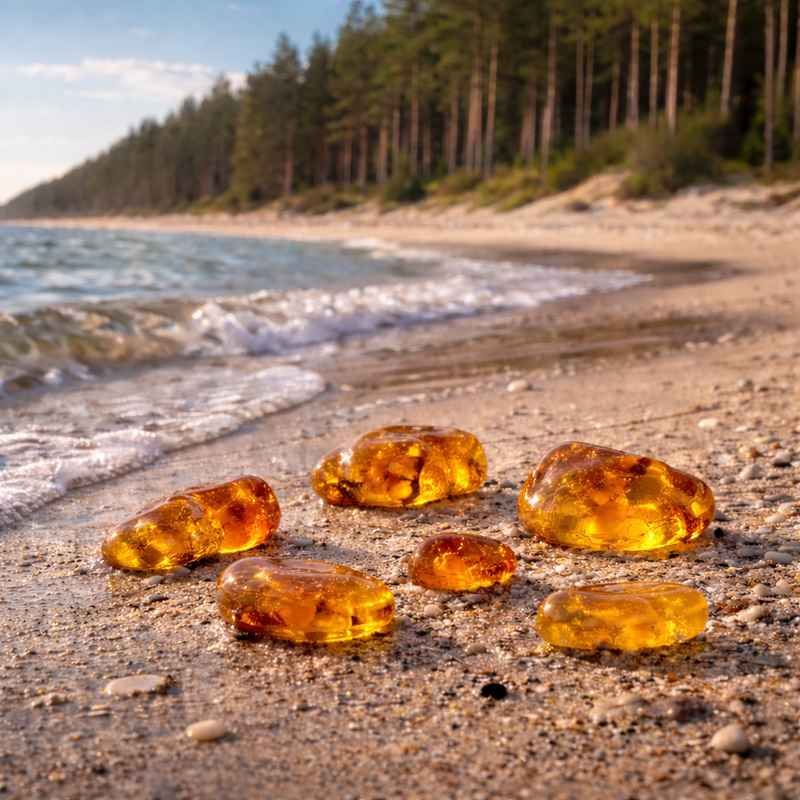
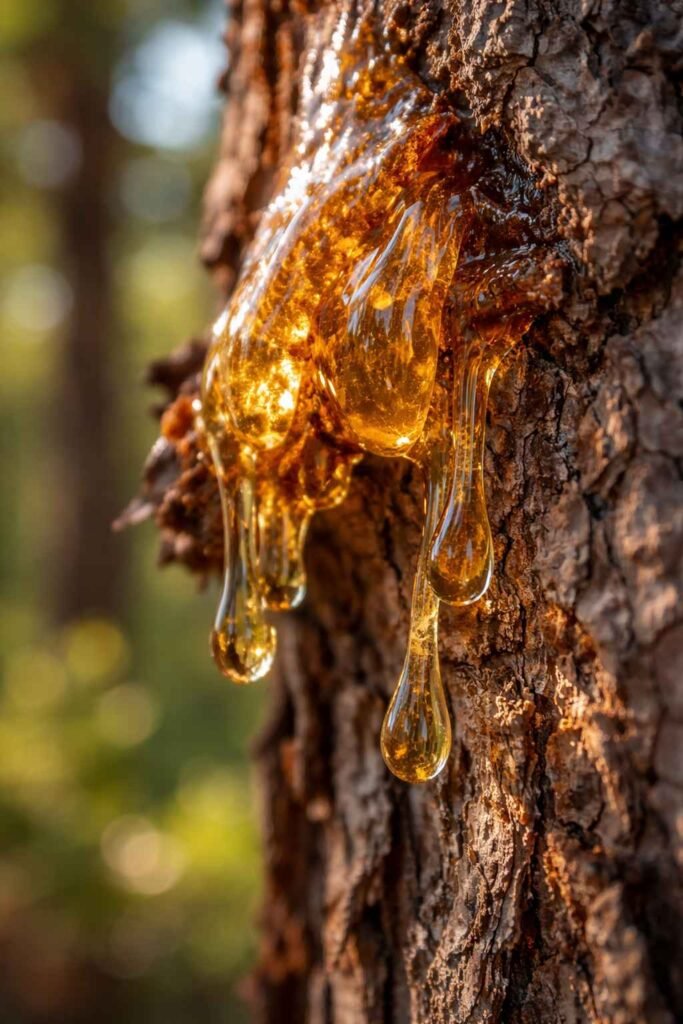
Amber originates from resin produced by prehistoric trees, primarily conifers. Resin serves as a defensive secretion, rich in organic compounds that protect trees from insects and infections.
Once exposed to air, resin begins to harden and can trap surrounding material. As it becomes buried, isolation from oxygen allows the internal amber composition to develop without biological decay.
How the Structure of Amber Forms Over Time
Early Resin Stabilization
At the earliest stage, resin is chemically unstable and highly adhesive. Insects, plant matter, and airborne particles become embedded, forming the foundation of internal amber features.
Polymerization and Molecular Bonding
With burial, volatile elements evaporate and molecules bond into long chains. This polymerization process strengthens the material and creates a resistant organic network.
Geological Maturation
Over millions of years, heat and pressure cause further cross-linking. The result is a rigid yet lightweight fossil material with high resistance to water and decay.
Chemical Composition of Amber Material
The internal makeup of amber consists mainly of carbon, hydrogen, and oxygen. These elements form complex organic polymers derived from plant terpenes.
Some amber varieties contain succinic acid, which contributes to chemical stability and influences physical behavior. The exact composition depends on tree species and environmental conditions.
Physical Properties of Amber
Transparency and Optical Effects
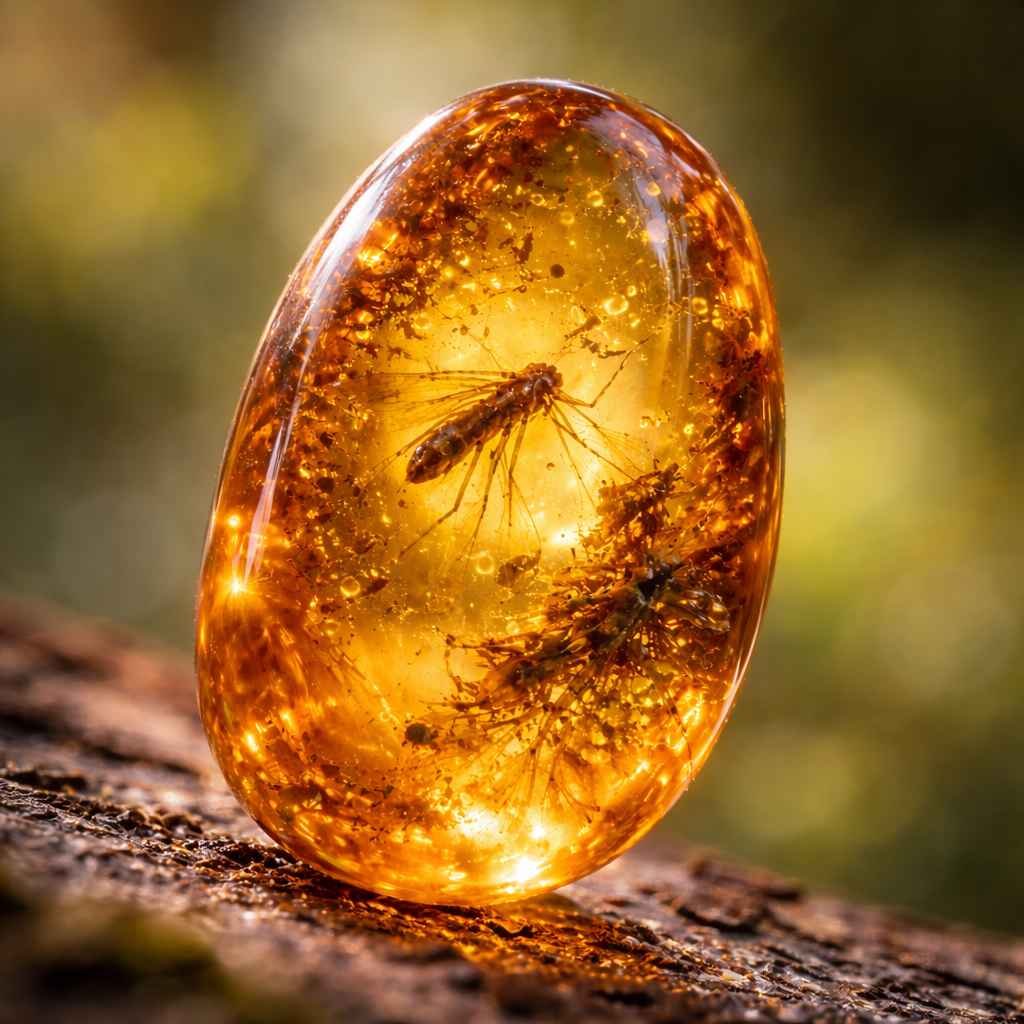
Amber ranges from transparent to opaque depending on microbubbles, inclusions, and internal layering. These factors influence how light travels through the material.
Color Development
Natural amber colors include yellow, orange, red, brown, and rare blue or green tones. Color variation results from oxidation, impurities, and light scattering within the fossilized resin.
Density and Hardness
Amber is lightweight and measures approximately 2–2.5 on the Mohs scale. Despite its softness, the material remains structurally stable due to its polymer network.
Internal Features and Inclusions
Preserved Biological Material
One of the most valuable characteristics of amber is its ability to preserve three-dimensional biological inclusions. Insects, plant tissues, and microorganisms can remain intact with exceptional detail.
The resin’s natural antimicrobial properties prevent decomposition shortly after entrapment.
Flow Lines and Layered Patterns
Visible flow lines within amber indicate multiple resin releases. These internal patterns help researchers interpret how the resin moved and hardened.
Stress Cracks and Aging Marks
Over time, amber may develop internal stress fractures, often used to distinguish natural material from synthetic imitations.
Regional Differences in Amber Formation
Baltic Amber
Baltic amber is typically cloudy and rich in succinic acid, reflecting its unique chemical history.
Dominican Amber
Dominican amber is younger and often clearer, making it highly valued for visible inclusions.
Burmese Amber
Burmese amber is significantly older and more polymerized, resulting in a darker and harder material.
Scientific and Practical Importance
Value for Paleontology
Amber provides rare insight into extinct ecosystems by preserving organisms in three dimensions.
Environmental Reconstruction
Chemical analysis of fossilized resin helps reconstruct ancient climates and forest environments.
Modern Research Applications
The long-term stability of amber inspires research into durable organic polymers and conservation science.
Amber in Jewelry and Decorative Use
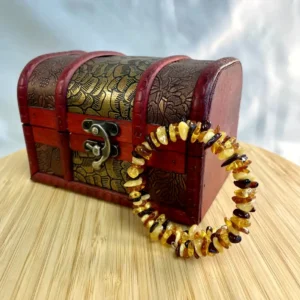
Amber has been valued in jewelry and decorative arts for centuries due to its warm color, light weight, and natural inclusions. The internal structure and clarity of amber directly influence how it is cut, shaped, and polished.
High-quality amber with balanced internal features is especially sought after for fine jewelry, as it allows artisans to highlight its natural beauty while maintaining durability. Depending on the form and structure, amber is commonly crafted into:
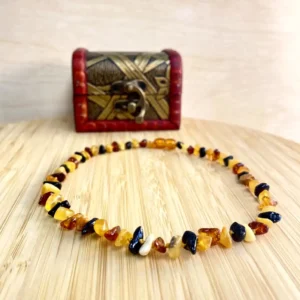
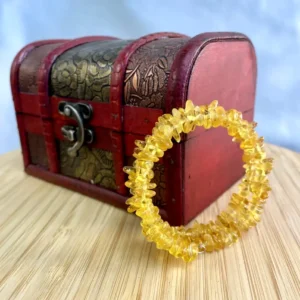
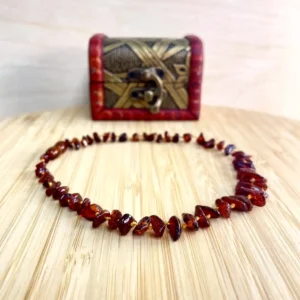
- Bracelets – often made from polished amber beads or raw, organically shaped pieces
- Rings – carefully selected amber cabochons set in silver or gold
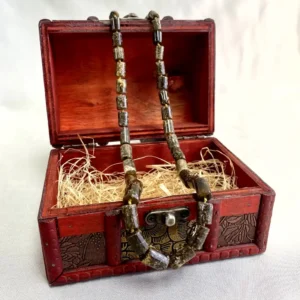
- Necklaces – ranging from delicate, translucent beads to bold statement pieces with natural inclusions
Each piece of amber jewelry is unique, shaped by nature and refined by craftsmanship, making amber accessories both timeless and distinctive.
Identifying Natural Amber
Visual Assessment
Natural amber shows irregular internal patterns rather than perfect uniformity.
Ultraviolet Reaction
Under UV light, genuine amber typically fluoresces in soft blue or green tones.
Density Testing
Due to its low density, amber can float in saltwater.
If you need more detailed tips and testing methods, read our full article: How to Tell If Amber Is Real: A Complete Guide
Frequently Asked Questions
What does amber structure mean?
It refers to the internal composition and layered organization formed as resin fossilizes over millions of years.
Why is amber so well preserved?
Rapid sealing and polymerization prevent biological decay.
Does all amber contain inclusions?
No, visible inclusions are relatively rare.
Can amber deteriorate?
It remains stable but may degrade if exposed to heat or UV radiation.
Is amber the same as copal?
No, copal is younger and not fully fossilized.
Final Thoughts
Amber structure reflects a rare combination of time, chemistry, and chance. Its internal features preserve evidence of ancient life and environments, making amber one of nature’s most informative organic fossils.