“Amber preserve DNA?” – it’s a question that captures imaginations. From Jurassic Park fantasies to serious fossil science, the idea that amber might lock in ancient genetic material is undeniably alluring. But what is the scientific reality?
In this article, we’ll explore what scientists have discovered – and failed to discover – about DNA preservation in amber, especially Baltic amber. We’ll summarize key studies, explain why DNA is highly unlikely to survive over millions of years, and show what kinds of biological molecules and structures are actually preserved in amber.
This discussion stays strictly factual – no speculation, no myths, only science-based evidence.
Amber as a Preservation Medium: Strengths and Limits
Before digging into DNA, it helps to understand what amber does preserve – and what challenges it poses to biomolecule survival.
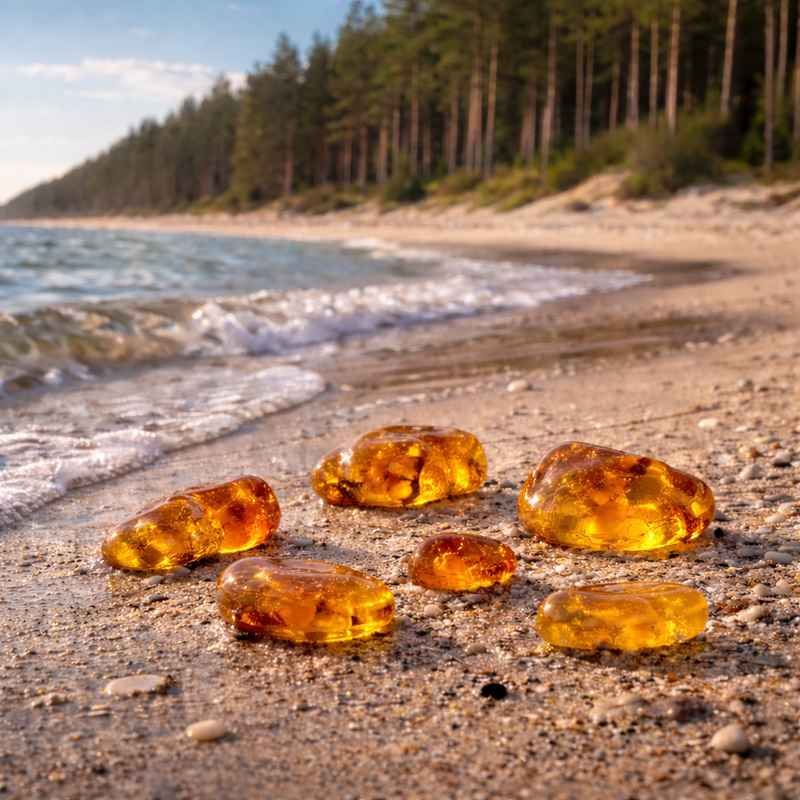
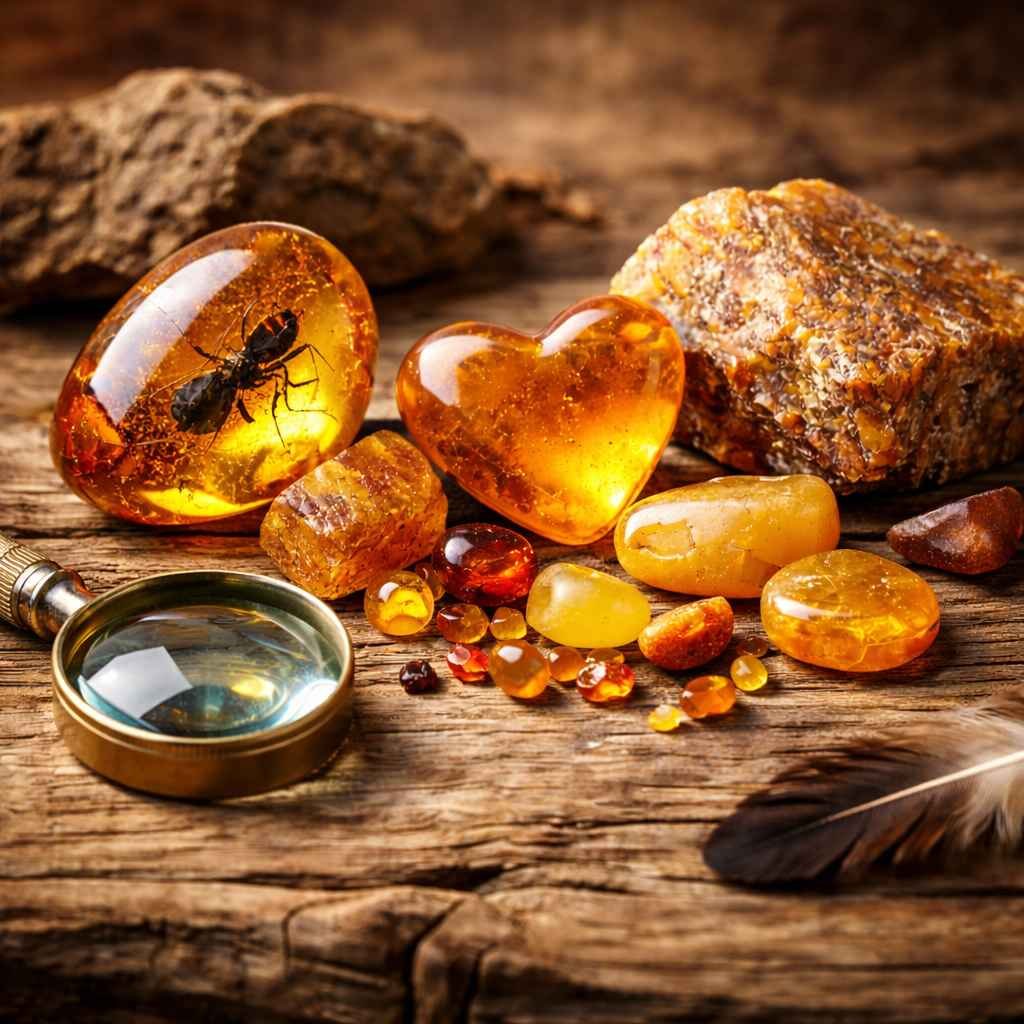
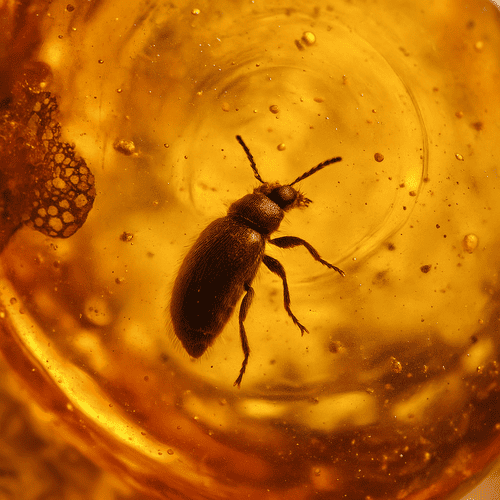
Amber is fossilized tree resin, and its ability to encapsulate and isolate organic matter makes it one of the most extraordinary natural time capsules. Insects, plant parts, air bubbles, and microscopic structures may remain intact for tens of millions of years. In that sense, amber has exceptional preservation power.
However, DNA is extremely fragile over geological timescales. Even under ideal conditions, DNA molecules break down through hydrolysis, oxidation, radiation damage, and depurination. Over tens of millions of years, the odds of retaining coherent DNA strands approach zero.
Much of the scientific literature concludes that while amber can preserve morphological detail – body shape, microstructures, cuticle layers – it does not reliably preserve endogenous DNA (the DNA originally inside the organism). In practice, claims of DNA recovery from amber are treated with scientific skepticism.
Let’s see what the science says in detail.
What Scientists Found: Studies of DNA Preservation in Resin, Copal, and Amber
Studies on Recent Resin and Copal (Young Resins)
Because true amber is extremely old, many studies focus instead on copal or relatively young resin inclusions to test DNA preservation limits. Copal is a sub-fossil resin – younger and less fully polymerized than amber.
In 2021, a team led by Alessandra Modi successfully extracted low-concentration DNA fragments from an insect trapped in copal (not amber). They used advanced protocols for ancient DNA (aDNA). Nature
However, the DNA was extremely degraded and in very low yield. The study itself notes that extrapolating results to much older amber is highly speculative.
Other studies testing copal and young resins (under 10,000 years old) also found that DNA recovery either fails or isn’t replicable.
These results suggest that even in younger resins, DNA preservation is extremely fragile. If copal – geologically “young” – poses such difficulty, it’s highly unlikely that millions-of-years-old amber can preserve DNA any better.
Attempts on True Amber
Attempts to isolate DNA from long-fossilized amber – such as Baltic amber (~40–50 million years old) – have largely failed or produced dubious results.
A key review, “DNA from Resin-Embedded Organisms: Past, Present and Future,” states that DNA is not preserved in insect inclusions in fossil resins or amber in any reliable form.
A 2019 article in Current Biology reassessed earlier studies and concluded that reports from the 1990s claiming DNA extraction from amber have not been reproducible.
An authoritative early paper, “Does Geologically Ancient DNA Survive in Amber-Preserved Organisms?”, also noted the lack of reproducibility and concluded that DNA does not survive for millions of years in amber.
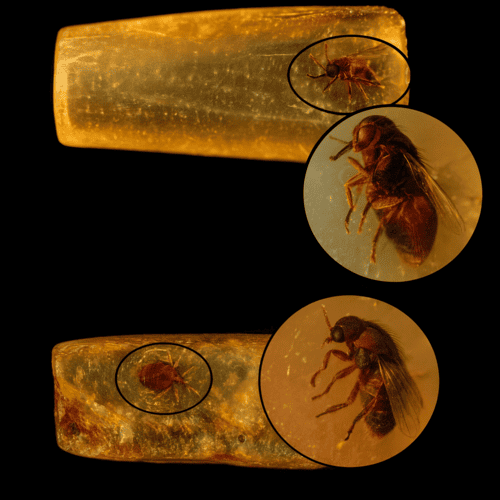
Synchrotron X-ray imaging research confirms that, although amber preserves extremely fine structural detail – cellular outlines, organ shapes, and microtextures – the internal biomolecules degrade beyond any recoverable DNA.
Studies of fossilized tissues report only remnants of chitin or cuticle proteins, not intact DNA.
Thus, while amber can preserve form, color, microscopic morphology, and even subcellular features, DNA does not reliably survive in Baltic amber or any truly ancient amber inclusions.
Why DNA Doesn’t Last in Amber: The Mechanisms of Degradation
To understand why amber preserve DNA is essentially a broken promise, we must examine how DNA decays over time – and how amber’s conditions contribute to, but also fail to prevent, that damage.
1. Chemical Hydrolysis & Backbone Breakage
DNA molecules break down over time through hydrolysis – the water-mediated cleavage of phosphate bonds. Even with minimal free water, trace moisture within inclusions can catalyze fragmentation and accelerate molecular decay.
2. Oxidation and Radical Damage
Radiation and reactive oxygen species (ROS) cause oxidative damage to DNA bases and the molecular backbone. Over tens of millions of years, even minimal exposure leads to irreversible molecular damage.
3. Depurination & Loss of Bases
Purine bases (adenine, guanine) spontaneously detach from the DNA chain over time. This process, known as depurination, creates abasic sites that further destabilize the DNA molecule and accelerate its breakdown.
4. Deamination and Base Substitutions
Cytosine deaminates to uracil, resulting in mutated DNA sequences. These chemical substitutions create errors that complicate any attempts at accurate genetic reconstruction.
5. DNA Fragmentation and Crosslinking
What remains tends to be ultrashort DNA fragments (less than 100 base pairs), while crosslinks between DNA and surrounding matrix molecules can block amplification and make sequencing attempts nearly impossible.
6. Contamination Overwriting Ancient Signal
Modern DNA – from handling, soil microbes, or laboratory contamination – often overwhelms any trace of authentic ancient DNA. Because the original amounts are so minimal, contamination becomes indistinguishable from the genuine genetic signal.
While amber offers some protection – isolation, dryness, and exclusion of microbes – it cannot completely prevent molecular decay over tens of millions of years.
What Does Amber Preserve? Biomolecules & Structures
Though DNA is effectively lost, amber does preserve many biological features and molecular remnants – and these remain scientifically invaluable.
Morphology & Microscopic Structures
- Cellular architecture: cell walls, membranes, organ outlines.
- Surface textures: hairs, microtrichia, fine scales.
- Three-dimensional form: shapes of limbs, antennae, wing veins.
These features are often visible under microscopy or X-ray microtomography. Some internal soft tissues, though mostly degraded, may still leave delicate structural impressions within the amber matrix.
Biomolecular Remnants: Proteins, Lipids, Chitin
- Chitin and cuticle fragments: Because chitin is chemically stable, parts of the exoskeleton may persist for millions of years.
- Protein fragments or peptides: In rare cases, degraded peptides or amino acids have been detected, though in highly fragmented or modified forms.
- Lipids and resin-infiltrated tissue residues: Some lipid molecules or plant resin remnants may diffuse into inclusion boundaries, forming subtle chemical traces.
- Mineralization and diagenetic alteration: Over time, mineralization can replace or fill internal spaces, preserving structure in fossilized form.
Thus, amber provides morphological and structural fidelity, but not genetic information – it captures form, not code.
Famous Case Studies & Real Discoveries in Baltic Amber
Although DNA preservation has not succeeded, many notable inclusion studies demonstrate just how remarkably well amber preserves ancient life forms.
Carnivorous Plant Traps in Baltic Amber
In 2015, scientists published the discovery of carnivorous plant leaf traps preserved in Baltic amber – offering rare and valuable insight into Eocene-era plant ecology.
Pseudoscorpion Species: Pseudogarypus synchrotron
A rare extinct pseudoscorpion species was imaged inside Baltic amber using synchrotron tomography. Though no DNA was recovered, scientists were able to study exceptionally fine morphological detail preserved within the specimen.
Beetle Xylolaemus sakhnovi
A fossil beetle, Xylolaemus sakhnovi, was discovered entombed in Baltic amber, dated approximately 37–48 million years ago. Researchers used its morphological features to classify the species – but no genetic data was recovered.
These cases highlight the power of morphological preservation in amber, even when DNA preservation completely fails.
Implication for Amber Jewelry and Collection
From a gemological or collector perspective, what does this mean?
Collections and museum exhibits rely on visual and morphological attributes, not molecular data.
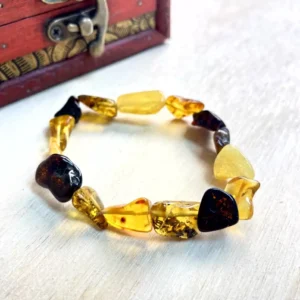
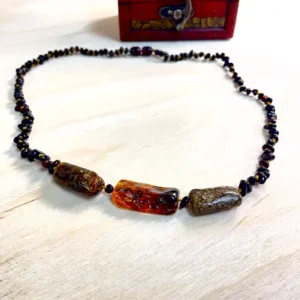
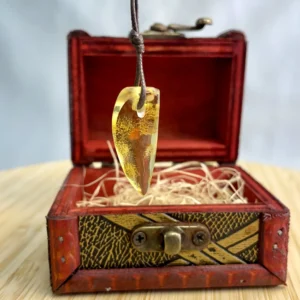
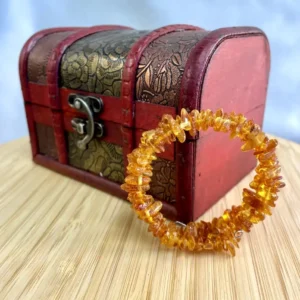
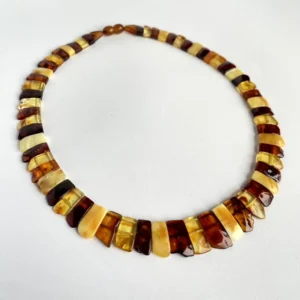
Baltic amber jewelry – whether necklaces, bracelets, or rings – often showcases inclusions, but those inclusions are studied morphologically, not genetically.
When marketing “insect in amber” pieces, it’s scientifically correct to emphasize preservation of form, not DNA.
Buyers should be aware – if a seller claims “DNA inside amber,” such statements are speculative at best, and likely false.
Frequently Asked Questions About Amber and DNA
Q1: Can amber preserve DNA over millions of years?
No. Over tens of millions of years, DNA undergoes irreversible degradation – hydrolysis, oxidation, and fragmentation. The scientific consensus is clear: DNA is not preserved in amber inclusions.
Q2: Has anyone ever extracted DNA from Baltic amber?
No credible or reproducible DNA extraction from authentic Baltic amber has ever been reported. Claims from the 1990s have not been validated using modern analytical methods.
Q3: Why did early reports claim DNA in amber?
Many early studies suffered from contamination, poor controls, or misidentification of modern DNA. Later analyses failed to replicate those results.
Q4: What biomolecules can amber preserve?
Amber can preserve morphological detail, chitin, protein fragments, lipid residues, and cellular structures – but not coherent DNA.
Q5: Could newer sequencing technologies ever recover DNA from amber?
While modern techniques are improving, molecular and chemical degradation in ancient amber remains too severe to recover endogenous DNA reliably.
Q6: Does this apply only to Baltic amber or to all amber types?
It’s a general limitation across all amber and fossil resins. Even younger resins (copal) show heavily degraded DNA, meaning older ambers fare even worse.
Final Thoughts: Amber’s Silence on the Genetic Code
The dream of retrieving dinosaur or insect DNA from amber – à la Jurassic Park – is compelling, but remains science fiction. Real-world experiments, rigorous studies, and modern sequencing techniques have failed to reliably recover ancient DNA from amber, especially from Baltic amber.
What amber does preserve is morphology – astonishingly faithful forms, delicate wing veins, hairs, traps of ancient plants, and impressions frozen in golden resin. That is its true power.
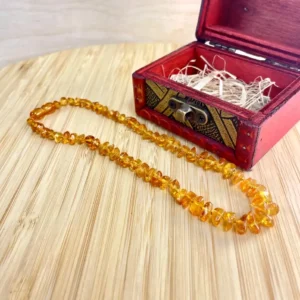
So when you admire a Baltic amber necklace, amber bracelet, or amber ring with an inclusion inside, you are not looking at centuries-old DNA – you are seeing a fragment of ancient life, preserved in resin, a story told in structure, not genetic code.
Amber doesn’t preserve DNA reliably.
It preserves form, silence, and time.