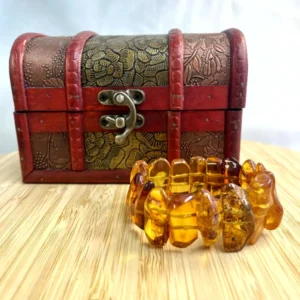
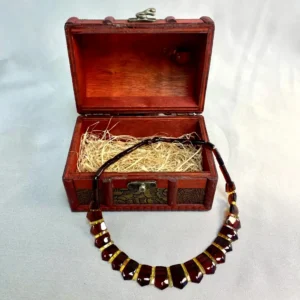
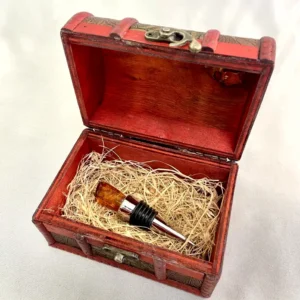
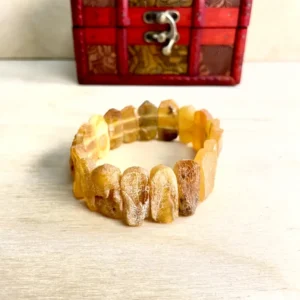
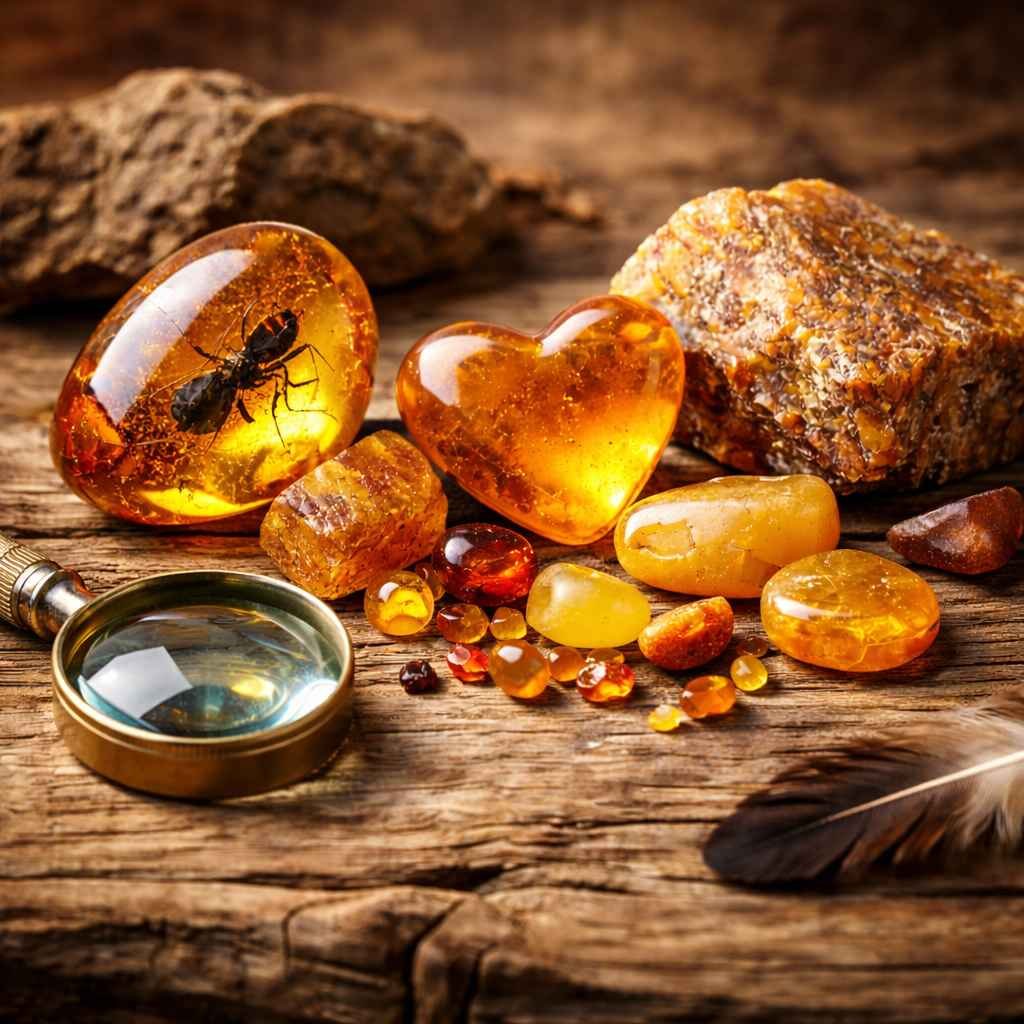
Amber, with its warm golden glow and natural beauty, has captivated people for thousands of years. From ancient amulets to modern Baltic amber jewelry, it’s valued for both its aesthetic appeal and its deep history.
However, not every piece sold as “amber” is genuine. The market is full of imitations—plastic, glass, and synthetic resins that mimic real amber’s appearance but lack its natural origin and energy.
Knowing how to tell if amber is real can protect you from scams, save money, and help you appreciate the authenticity of one of nature’s most fascinating gemstones.
In this comprehensive guide, we’ll cover:
- What real amber actually is
- Why verifying authenticity matters
- The most common fake amber materials
- Seven proven tests (both home and professional) to identify real amber
- Expert tips and frequently asked questions to help you confirm authenticity confidently
What Is Amber?
Amber isn’t a mineral—it’s an organic gemstone, formed from fossilized tree resin that hardened millions of years ago.
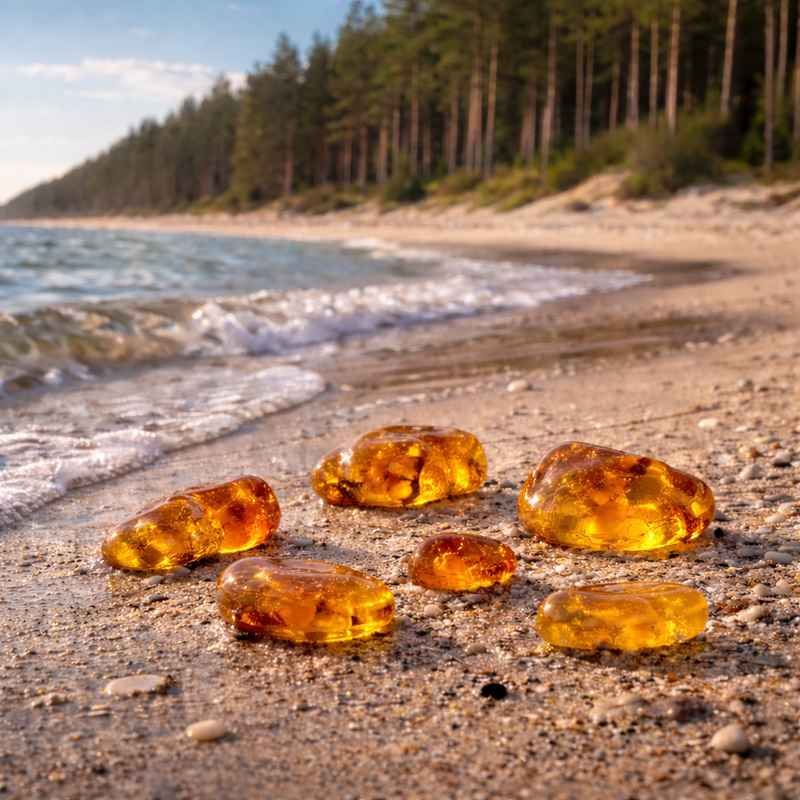
The most famous and highest-quality type is Baltic amber, found around the Baltic Sea in Lithuania, Poland, Latvia, and Kaliningrad. It’s approximately 44 million years old and often contains fascinating inclusions like ancient insects, flowers, and air bubbles trapped in time.
Key characteristics of real amber
- Age: Between 20–50 million years old (Baltic amber is ~44 million).
- Texture: Lightweight and slightly soft (2–2.5 on Mohs hardness scale).
- Touch: Warm and smooth—not cold like glass.
- Scent: When rubbed or gently heated, it emits a pleasant pine or earthy aroma.
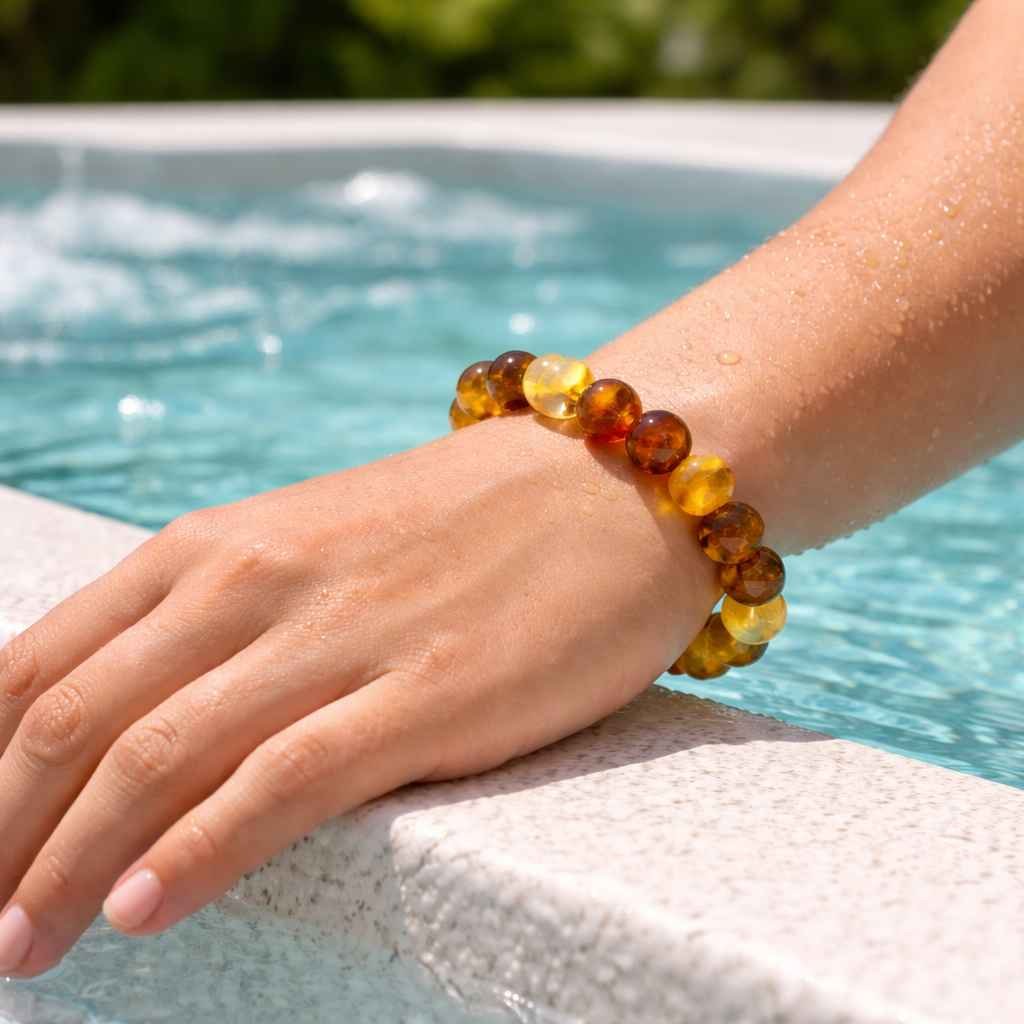
- Color: Ranges from golden yellow to honey, cognac, cherry, green, and even rare blue tones.
Amber’s organic origin makes each piece unique—no two are exactly alike.
Why It’s Important to Verify Amber’s Authenticity
The value of amber depends heavily on its authenticity, age, and inclusions. Genuine amber can be worth hundreds or even thousands of dollars, while synthetic or “pressed” versions have only decorative value.
Why fake amber is so common
- High demand for amber jewelry has led to a rise in counterfeit products, especially online.
- Cheap materials like plastic, glass, or copal (young tree resin) can be easily dyed and molded to look like amber.
- Many fakes even contain artificial “insects” that look too perfect to be real.
Risks of buying fake amber
- You may overpay for worthless plastic or resin.
- Fakes have no geological or historical value.
- Synthetic materials can discolor, melt, or emit toxic smells when heated.
- Collectors lose credibility when pieces turn out to be fake.
If you love amber for its history and natural energy, authenticity matters.
Common Imitations of Amber
Before learning the tests, it helps to know what materials are often mistaken for or sold as amber.
1. Copal
- A younger, semi-fossilized tree resin (a few hundred–thousand years old).
- Softer and stickier than amber.
- Emits a stronger resin smell when heated.
- Melts easily and lacks the hardness of true amber.
2. Plastic (Bakelite, Celluloid, Polyester Resins)
- Feels lighter but too uniform in color.
- When heated, gives off a chemical or sweet synthetic odor.
- May show mold seams or bubbles that look artificial.
3. Glass
- Heavier and colder to the touch.
- Very smooth and perfect in texture—no organic inclusions.
- Does not emit any scent when heated.
4. Pressed or Reconstructed Amber
- Made by fusing small pieces of amber under pressure and heat.
- Real amber fragments are used, but it’s not naturally formed.
- Often sold deceptively as “natural amber.”
Knowing these impostors helps you interpret test results correctly.
How to Tell If Amber Is Real: 7 Proven Tests
Below are seven reliable methods—ranging from simple observation to professional analysis—to verify authenticity.
⚠️ Important: Always test carefully, especially with heat or scratching. When in doubt, seek a gemologist’s opinion.
1. Visual Inspection
This is your first line of defense—and with practice, your eyes can spot many fakes.
What to look for:
Inclusions: Real amber may contain air bubbles, plant matter, or tiny insects. Genuine inclusions look natural—not perfect or staged. If the “insect” looks flawless or too centered, it’s likely fake.
Texture: Authentic amber has slight imperfections—tiny ripples, uneven polish, or minuscule cracks. Fakes are often too smooth or glossy.
Color Variation: Real amber isn’t uniform; you’ll notice slight shifts in hue, transparency, and tone.
Tip: Under a magnifying glass, real amber looks organic and warm. Glass and plastic appear too flawless or have visible mold lines.
2. Touch and Temperature Test
Amber feels distinct against the skin.
- Real amber: warm, smooth, and quickly takes on body temperature.
- Fake amber (glass): stays cold and heavy.
- Fake amber (plastic): may feel sticky or greasy after a while.
Simply hold the piece for a few seconds—real amber warms quickly because of its low thermal conductivity.
3. Saltwater Float Test
One of the easiest home methods for identifying real amber.
How to do it:
1. Mix 7–8 teaspoons (about 50 g) of salt into 1 cup (250 ml) of water. Stir until fully dissolved.
2. Drop your amber piece into the solution.
Results:
- Real amber: floats.
- Most fakes (glass, plastics): sink.
Because amber’s density is low (~1.05 g/cm³), it will float even in a mild salt solution.
⚠️ Do not use this test for jewelry set in metal—it may corrode the fittings.
4. Scratch Test (Use With Caution)
Amber is relatively soft (2–2.5 on the Mohs scale).
Gently scratch an inconspicuous area with a needle or pin.
- Real amber: leaves a whitish scratch mark.
- Plastic: may flake or peel.
- Glass: won’t scratch at all.
Never use this on finished jewelry unless you’re certain you can polish the mark away.
5. Scent or Burn Test
Amber’s smell is unmistakable—earthy, pine-like, slightly sweet.
Option 1: Friction Test
Rub the piece vigorously with a soft cloth. The friction generates warmth, releasing a mild pine scent.
Option 2: Needle-Heat Test
Heat a needle tip and touch it gently to a hidden part of the amber.
- Real amber: emits a pine or forest-resin smell.
- Copal: stronger, sharper pine odor.
- Plastic: chemical or sweet synthetic smell.
⚠️ Never apply an open flame—amber burns easily.
6. UV Light Test
Amber fluoresces beautifully under ultraviolet (black) light.
Procedure:
Shine a UV lamp or portable blacklight on the amber in a dark room.
Results:
- Real amber: soft blue, green, or pale yellow glow.
- Copal: bright blue or whitish glow.
- Plastic/glass: little to no fluorescence, or sharp bright blue light.
This test is non-destructive and great for quick verification.
7. Professional Verification
If your piece is valuable or uncertain, professional confirmation is best.
Certified gemologists can perform:
- Infrared spectroscopy (FTIR) — identifies amber’s chemical signature.
- Refractive index testing — measures light behavior unique to amber.
- Microscopic analysis — authenticates natural inclusions.
Reputable sellers should also provide:
- Certificates of authenticity.
- Detailed origin information (e.g., “Baltic amber, Kaliningrad”).
When buying high-value Baltic amber necklaces, amber bracelets, or amber rings, always request documentation.
Additional Clues to Identify Genuine Amber
Electrostatic charge: When rubbed with wool or silk, real amber can attract small paper pieces due to static electricity. (The word “electricity” itself derives from Greek elektron, meaning amber.)
Sound test: Tap amber gently against your teeth—real amber makes a dull, soft sound, while glass clicks sharply.
Weight: Amber is very light; glass feels heavy.
Combination findings: Use several tests for the most reliable conclusion—no single method is foolproof.
Where to Buy Authentic Amber
To avoid fake products altogether, purchase from reputable sources that specialize in Baltic amber jewelry:
- Established amber workshops or museum stores in Lithuania, Latvia, or Poland.
- Online retailers that provide lab verification or authenticity certificates.
- Jewelers with long-standing reputations and positive reviews.
Avoid deals that seem too good to be true—especially “amber with insects” sold cheaply online. Genuine insect inclusions are extremely rare and expensive.
Why Knowing How to Tell If Amber Is Real Matters
Beyond monetary value, real amber carries emotional and historical resonance. It’s not just a gemstone—it’s a 40-million-year-old story of life, time, and transformation.
Owning genuine amber means owning a tangible link to Earth’s deep past.
Knowing how to identify it means preserving that authenticity for generations.
Frequently Asked Questions (FAQ)
Q1: What’s the quickest way to tell if amber is real?
The saltwater float test is fast and non-destructive—real amber floats, while most fakes sink. Combine it with the UV light test for extra certainty.
Q2: Does real amber burn?
Yes. Amber is an organic resin and burns easily, producing a pine-like aroma. Avoid open-flame tests on jewelry—use gentle heating or friction instead.
Q3: How can I spot fake amber with insects inside?
Real insect inclusions look imperfect and random. In fakes, insects are often centered or too pristine. Under magnification, genuine inclusions appear embedded in multiple resin layers, not sitting flat.
Q4: Is pressed amber considered real?
Pressed or reconstructed amber is made from genuine fragments fused under pressure. It’s partially authentic but less valuable than natural, whole-formed amber.
Q5: Can real amber be perfectly clear?
Yes, but completely transparent pieces are rare and costly. If a large bead looks flawless and inexpensive, it’s likely imitation glass or plastic.
Q6: Does real amber have a smell?
Yes—when rubbed or gently heated, amber releases a pine-resin scent. Plastic emits chemical or burnt smells instead.
Q7: Is all Baltic amber the same?
No. Quality depends on origin, color, and clarity. Amber from the Baltic region is generally the most ancient and stable, containing up to 8 % succinic acid.
Q8: How do professionals verify amber?
Gemologists use spectroscopy and refractometers to detect the unique optical and molecular patterns that only genuine amber possesses.
Final Thoughts: Confidence in Authenticity
Learning how to tell if amber is real transforms you from a casual buyer into an informed collector. By understanding amber’s nature and testing it wisely, you not only avoid imitation but also deepen your connection to this remarkable organic gemstone.
Real amber glows with history—it’s sunlight and time preserved forever.
So whether you’re investing in a Baltic amber necklace, gifting an amber bracelet, or simply admiring a single polished bead, remember: authenticity adds meaning.
When you hold genuine amber, you hold a piece of the Earth’s ancient heartbeat—light from the past shining in your hands.