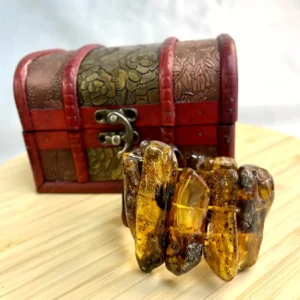
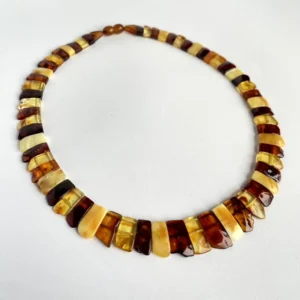
Amber evokes light, memory, mystery, and myth. The story of amber is woven through the ages: through glaciers, sea storms, fishermen, gods and mortals, and the hands of artisans crafting Baltic amber jewelry like Baltic amber necklaces, amber bracelets, and amber rings. But before amber becomes a cherished adornment, it first journeys from deep time into legend.
In this article, we explore the story of amber in its mythic and legendary dimension. We trace how Baltic peoples explained the emergence of amber in the sea, how stories like Jūratė and Kastytis became enduring cultural touchstones, and how variants of amber myths appear across Baltic folklore and beyond. Every fragment of lore is another piece in the tapestry of the story of amber.
The Landscape of Legend: Why Amber Needs a Story
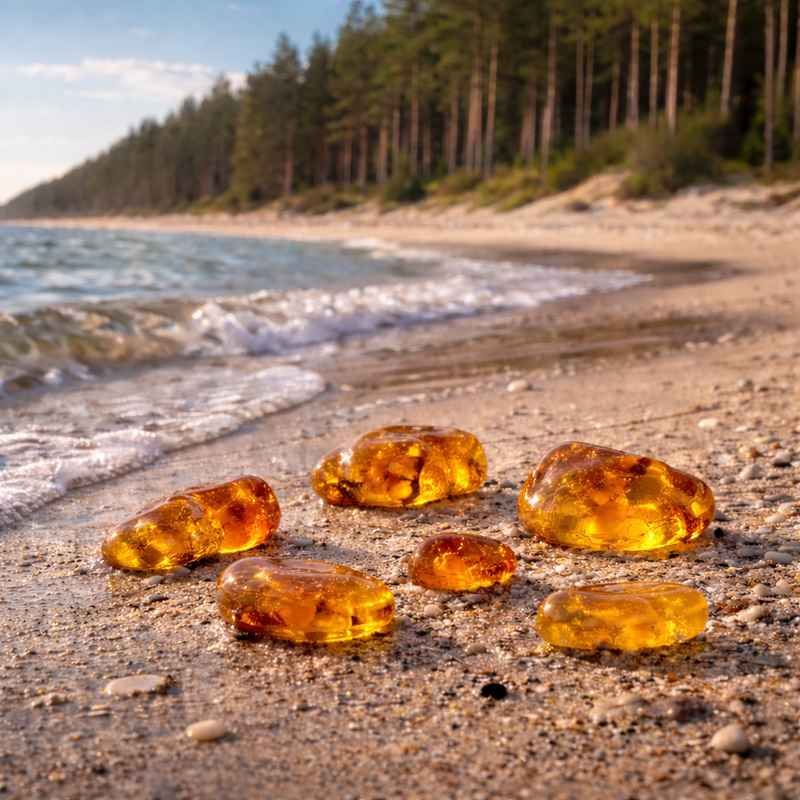
Before diving into specific tales, it helps to understand why societies created legends about amber. Unlike gemstones formed in rock, amber often washes ashore: after storms, waves deposit smooth golden nuggets. To ancient coastal communities, these glowing drops seemed like divine gifts, tears, or fragments of celestial palaces.
Because amber is light and luminous, its arrival from the sea felt magical rather than material. Legends offered explanations: when the sea raged, gods wept; when thunder cracked, underwater palaces were shattered. These stories root Baltic amber not merely in geology, but in human imagination.
Many of these legends survive to this day, and their cultural footprint is still visible: statues, operas, poems, place names, and museum exhibits. The story of amber is both natural and narrative.
The Legend of Jurate and Kastytis: The Central Myth of Baltic Amber
No legend is more central to the Baltic amber canon than Jūratė and Kastytis (Lithuanian: Jūratė ir Kastytis). This tragic love story is often invoked to explain why pieces of amber wash ashore after storms.
The Core Narrative
According to the most common version of the legend:
- Jūratė was a sea goddess or mermaid who lived in a magnificent underwater amber palace at the bottom of the Baltic Sea.
- Kastytis was a mortal fisherman who cast his nets in the sea near her domain. She fell in love with him and welcomed him into her luminous palace.
- Their secret love offended the thunder god Perkūnas, the Baltic deity of sky and thunder.
- Enraged, Perkūnas struck the amber palace with bolts of lightning, shattering it into countless fragments.
- Kastytis died — or vanished — in the storm. Jūratė was left imprisoned or bound to the ruins, grieving endlessly.
- The pieces of amber that wash ashore after storms are said to be the broken fragments of her underwater palace — or her tears of sorrow.
In some tellings, sailors claim you can still hear her voice lamenting during stormy seas.
Thus, every fragment of Baltic amber becomes part of a cosmic heartbreak — an echo of a palace in pieces, shared between sea and shore.
Variations and Emphases
Like many oral traditions, the legend exists in several forms:
- In some versions, Jūratė rescues Kastytis from drowning and pleads with Perkūnas. Kastytis does not always die but is lost, while Jūratė is imprisoned.
- In others, Kastytis is slain outright by Perkūnas’ thunderbolt, and Jūratė mourns eternally among the sea ruins.
- Some versions place Kastytis’s home in the town of Šventoji, north of Palanga.
- Occasionally, the legend is tied directly to the Palanga coast, where amber fragments washed ashore are seen as memorials of the fallen palace.
- The coat of arms of Palanga features a silver crown and amber beads in reference to this myth.
- In literary adaptations — poems, ballets, and operas — additional elements such as dialogues, dreams, and symbolic transformations are often introduced.
Cultural Legacy and Influence
- The legend of Jūratė and Kastytis was first recorded in 1842 by Liudvikas Adomas Jucevičius, though it almost certainly existed much earlier in oral tradition.
- It later inspired poems by the Lithuanian poet Maironis, as well as theatrical performances, operas, and even modern rock operas.
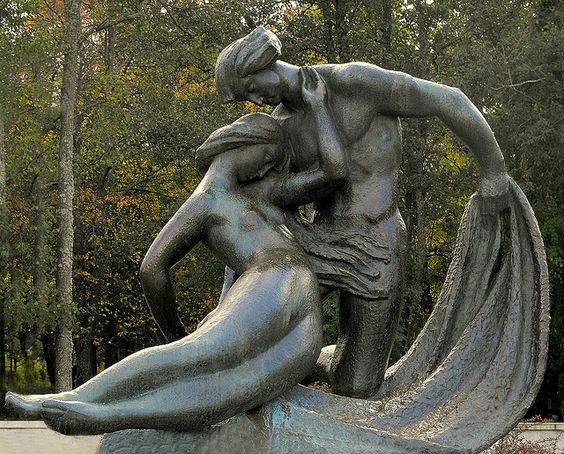
- Palanga, one of the most important Baltic amber centers, features a monument to Jūratė and Kastytis, and the town’s cultural identity and tourism often reference the myth.
- The name Jurata is also used for a seaside resort in Poland, reflecting the legend’s cross-Baltic influence.
- In heraldry and municipal symbolism, the image of a broken amber castle appears as a recurring motif tied to the story.
For Baltic people, when you pick up a warm, honey-colored piece of amber on the shore, you are touching a legend — a palace, lost love, thunder, and the tears of the sea.
Other Amber Legends Across Baltic and European Folklore
Tears of the Sun Goddess
One poetic motif treats amber as the tears of the sun after sorrow. In Baltic mythology, the goddess Saulė (the Sun) is a powerful solar deity. Some folklore suggests amber is her sorrow crystallized—her tears weeping for lost love or cosmic imbalance.
In some folk legends, people punished by floods wept endlessly; their tears hardened into amber, with lighter amber symbolizing purity and darker amber symbolizing greater sin.
These legends mirror the storm-amber relationship; after floods or sea violence, amber appears as a purified remnant of grief.
Baltic Seamaidens and Amber Palaces
In addition to Jūratė, other water-spirit legends speak of maidens living in amber palaces:
- In some Latvian tales, a sea queen dwells beneath the waves in an amber castle and is associated with magical birds or treasures.
- In a Polish fairy tale variant, water-dwellers with amber-colored hair live with an “Amber King” under the sea, in a palace of amber.
These stories often echo the motif: a mortal glimpses the underwater realm and is drawn into forbidden love, conflict, or disappearance.
Greek Mythology and Amber
Ancient Greek myths were later adapted into amber lore:
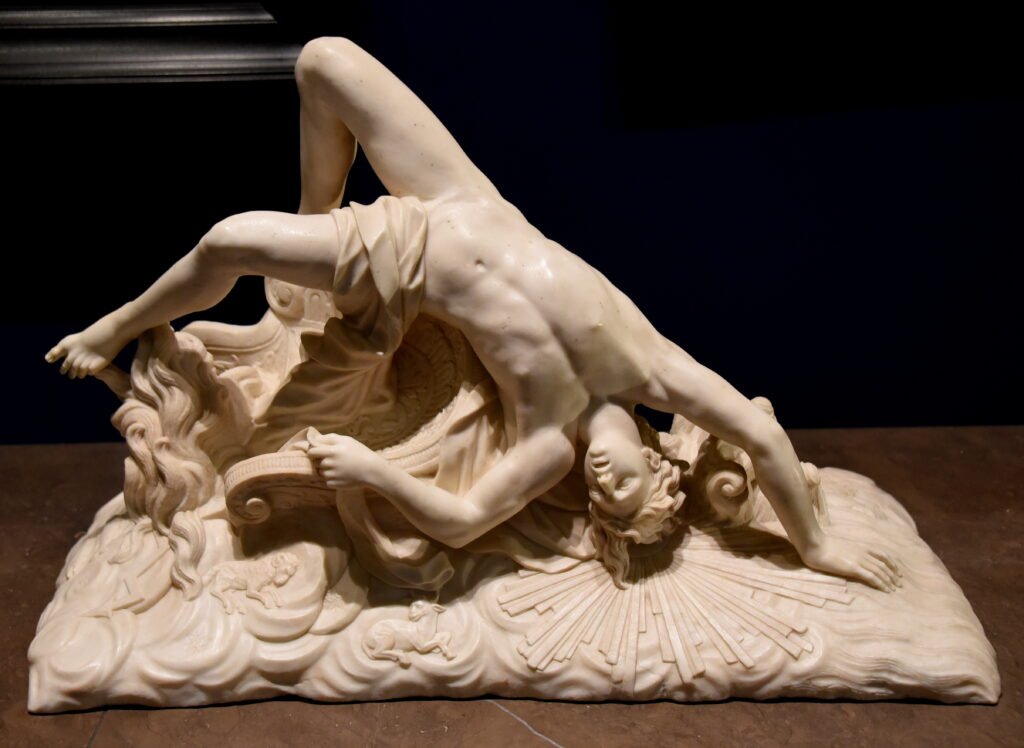
- The myth of Phaethon describes his sisters weeping amber tears after his fiery death.
- Another legend views amber as the hardened tears of Clymene or the daughters of Helios.
Although not Baltic in origin, these myths show how amber’s symbolic resonance traveled and intertwined with new traditions.
The Journey: From Undersea Palace to Beach Pebble
Legend imagines amber not forming in mines but being shattered and carried by the sea to the shore.
In the Jūratė story, the thunderbolt breaks apart an amber castle. These fragments later wash ashore after storms or strong tides. This aligns with real experience: amber appears on beaches after storms, hidden in seaweed or sand, polished by waves.
Thus, the legend bridges the physical phenomenon with imaginative meaning. The sea throws out amber drops, and humans gather them — turning myth into jewelry.
The Amber Road and Ancient Trade: Echoes in Legend
Beyond myth, amber traveled far along ancient trade networks — the Amber Road.
From prehistoric times, amber moved from the Baltic to the Mediterranean, Egypt, and the Near East.
Foreign cultures viewed amber as exotic, magical, or divine.
Pieces of amber found in Egyptian tombs show how far the story traveled.
The mythical journey (sea to shore) mirrors the real one (Baltic to distant lands). Both deepen amber’s identity as a cultural and symbolic gem.
Symbolism Woven into the Story of Amber
- Tears and Grief — amber often represents crystallized tears.
- Love and Forbidden Union — many tales hinge on tragic or divine love.
- Destruction and Renewal — storms destroy but also create beauty.
- Connection Between Sea and Land — amber embodies the border of two realms.
- Memory and Permanence — amber preserves stories across time.
When Legend Becomes Material: Amber in Cultural Practice
Palanga’s amber museums celebrate the mineral’s legendary and historical role.
Artisans evoke Jūratė’s palace in their designs of Baltic amber necklaces and rings.
People have long believed amber carries protective or healing powers.
Artists and writers continue retelling the Jūratė story.
Thus, when someone wears Baltic amber jewelry, they carry both a gem and a myth.
Modern Echoes: Revisiting the Story of Amber Today
Tourists often hear the Jūratė story while collecting amber on Baltic beaches.
Festivals, folklore events, and exhibitions retell the myth.
Modern adaptations explore new versions of the legend.
Place names, monuments, and coats of arms reflect amber symbolism.
Examining the Legend: Symbol, Story, and Amber
The Jūratė legend endures because it unites all facets of amber’s allure:
- Origin connected to the sea
- Emotional weight — tears, heartbreak, beauty born of loss
- Divine and mortal worlds intertwined
- Explanation for amber washing ashore
The legend shapes how amber is perceived: not just a gem, but a story suspended in gold.
Frequently Asked Questions About the Story of Amber
Q1: What is the main story of amber?
The main story of amber is the legend of Jūratė and Kastytis, in which the sea goddess Jūratė’s amber palace is shattered by a thunder god, scattering amber across the Baltic Sea.
Q2: Why does Baltic amber wash up after storms?
According to legend, storms release fragments of Jūratė’s broken palace or her eternal tears. In reality, sea currents and storms bring fossilized resin from seabeds to the shore.
Q3: What does amber symbolize in Baltic mythology?
Amber symbolizes love, grief, transformation, and eternal light.
Q4: Are there other legends besides Jūratė and Kastytis?
Yes. Other tales describe amber as tears of the sun goddess, remnants of underwater palaces, or divine weeping in Greek tradition.
Q5: Why is amber called the Gold of the North?
Because of its golden color and historic value, Baltic amber has been prized for thousands of years and traded widely along ancient routes.
Q6: How is the story of amber connected to jewelry today?
Each piece of Baltic amber jewelry continues the legend, turning ancient myth into a tangible adornment.
Summary: The Story of Amber, Woven from Legend
To recap, the story of amber draws together:
- The central legend of Jūratė and Kastytis
- Parallel tales across Baltic and Greek traditions
- Symbolic themes of grief, love, destruction, and renewal
- Cultural expressions in art, tourism, jewelry, and identity
- The physical journey of amber from sea to hand
Thus, every time someone holds a piece of Baltic amber, they hold a fragment of a mythic palace, a tear frozen in gold, and a link between sea, sky, time, and human imagination.