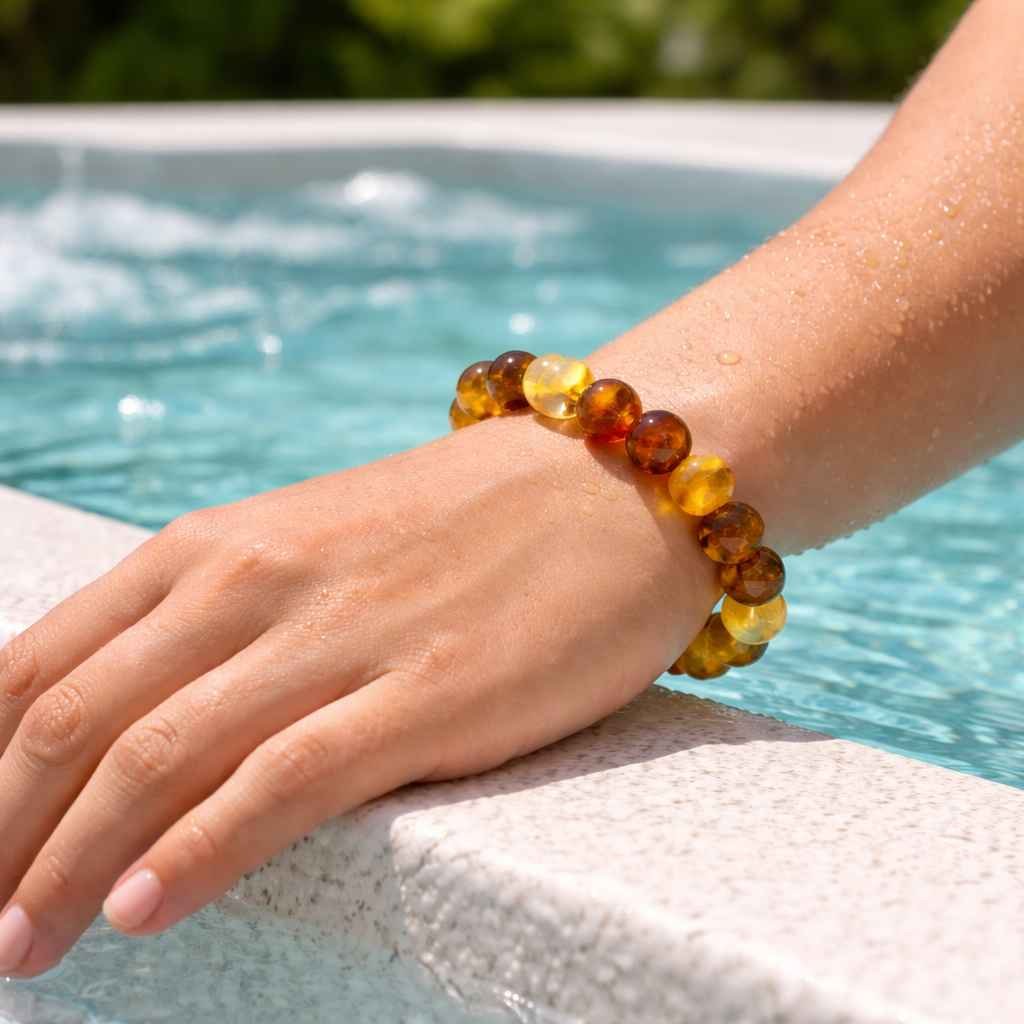
Amber jewelry has a unique glow—warm, natural, and impossible to imitate perfectly. However, amber is not a hard mineral gemstone. Instead, it’s fossilized tree resin, which makes it more sensitive to heat, chemicals, and abrasion than stones like quartz or sapphire. That doesn’t mean amber is “fragile.” Rather, it means it needs different rules.
If your amber looks dull, cloudy, scratched, or simply “tired,” it usually wasn’t one dramatic event. More often, it was repeated exposure: sun and UV, heat and sudden temperature changes, perfume and hair products, chlorine from pools, household cleaners, sweat from sports, and daily friction. In this guide, you’ll learn what actually damages amber jewelry, why it happens, and what to avoid so your pieces stay luminous.
Sunlight and UV Exposure: A Slow but Real Cause of Dulling

Direct sunlight (outdoors, beach days, car dashboards)
Sun exposure is one of the most overlooked factors in amber’s appearance over time. For instance, long periods in direct sunlight can gradually reduce surface brilliance and make amber look less “deep.” This often happens when jewelry is left in places like:
- a windowsill,
- a dressing table near strong daylight,
- a car (especially on the dashboard),
- a beach towel or bag during summer.
While wearing amber outside for normal daily activities is usually fine, prolonged exposure—hours at a time, repeatedly—can contribute to a duller look over months.
UV light through windows (the “invisible” daily exposure)
Even indoors, UV can be a factor. If you store amber jewelry where it receives daily sunlight through a window, the exposure accumulates. As a result, the effect is typically subtle: less sparkle, a slightly flatter tone, and a surface that looks more matte than it used to.
What to avoid: leaving amber jewelry in strong sunlight for long periods, especially in hot environments like a car.
Heat: One of the Fastest Ways to Change Amber’s Surface Look
High heat sources (saunas, heaters, radiators, hot styling tools)
Heat can accelerate surface wear and reduce shine. Unlike glass or metal, amber is organic. Consequently, repeated exposure to heat can make the surface appear less crisp and less glossy over time. Common heat risks include:
- saunas and steam rooms,
- sitting close to radiators or heaters,
- hot hair styling tools near necklaces,
- leaving jewelry near warm electronics or lamps.
Hot water environments (showers and baths)
Even if amber briefly gets wet, hot showers combine heat with soaps, shampoos, and friction. Because of that, the combination is much more stressful than plain water. If amber is worn regularly in hot showers, it can lose its polished look faster.
What to avoid: exposing amber to high heat repeatedly—especially saunas, hot cars, and frequent hot showers.
Temperature Shocks: Sudden Changes That Create Long-Term Wear
Hot-to-cold or cold-to-hot transitions
Temperature shock doesn’t always cause an immediate crack. Instead, it more often contributes to gradual surface stress and micro-wear. Examples include:
- stepping from winter cold into strong indoor heating,
- wearing amber in a hot shower, then moving into cool air,
- bringing jewelry from a freezing outdoor environment near a heater,
- rinsing a warm piece under very cold water.
Over time, these quick changes can make amber look less glossy and more “aged.”
What to avoid: rapid temperature changes. In general, stable, moderate conditions are safer for amber’s finish.
Perfume, Hairspray, and Cosmetics: The “Looks Dull” Trifecta
Perfume: alcohol and aromatic compounds
Perfume is one of the most common causes of an amber necklace losing its glow. Many perfumes contain alcohol and fragrant oils that can leave a thin film. As a result, that film attracts dust and reduces clarity. Even if the amber is not “chemically damaged,” the surface can look cloudy or muted.
Avoid: spraying perfume directly on skin and immediately placing amber jewelry on the same area.
Hairspray: sticky residue and overspray
Hairspray settles everywhere—especially around the face and neck where necklaces and earrings sit. Over time, it can create a residue that dims amber’s natural shine and makes the surface look less clean and less transparent.
Avoid: using hairspray while wearing amber jewelry.
Cosmetics and skincare: sunscreen, lotions, oils, makeup transfer
Cosmetics like sunscreen, body lotion, facial oils, foundation, and hand cream can all reduce amber’s shine by leaving a coating on the surface. In practice, this is a common issue for:
- necklaces worn on moisturized skin,
- bracelets rubbing against sunscreened arms,
- rings exposed to hand cream multiple times a day.
Avoid: putting amber jewelry on immediately after applying skincare, sunscreen, or lotion. Instead, let products absorb first.
Chlorine and Swimming Pools: A Clear “Don’t”
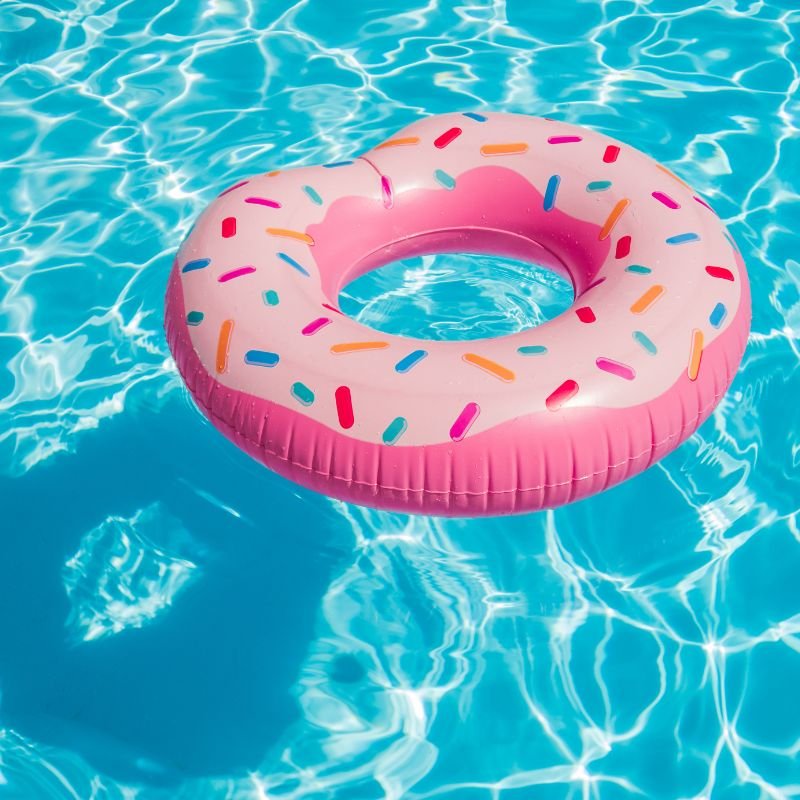
Chlorinated pool water
If there is one environment that consistently causes problems for amber jewelry, it’s the swimming pool. Chlorine is harsh, and repeated exposure can dull amber’s finish and contribute to a worn look.
Avoid: wearing amber jewelry in a pool—especially amber bracelets and amber rings that remain submerged and in contact with chlorine for longer.
Poolside habits that worsen exposure
Even if you remove jewelry before swimming, many people leave it:
- in direct sun on a towel,
- in a hot bag near the pool,
- near sunscreen spills and sprays.
That combination—chlorine environment + heat + sunlight + cosmetics—is a “perfect storm” for amber losing its glow.
Household Cleaners and Chemicals: The Hidden Daily Risk
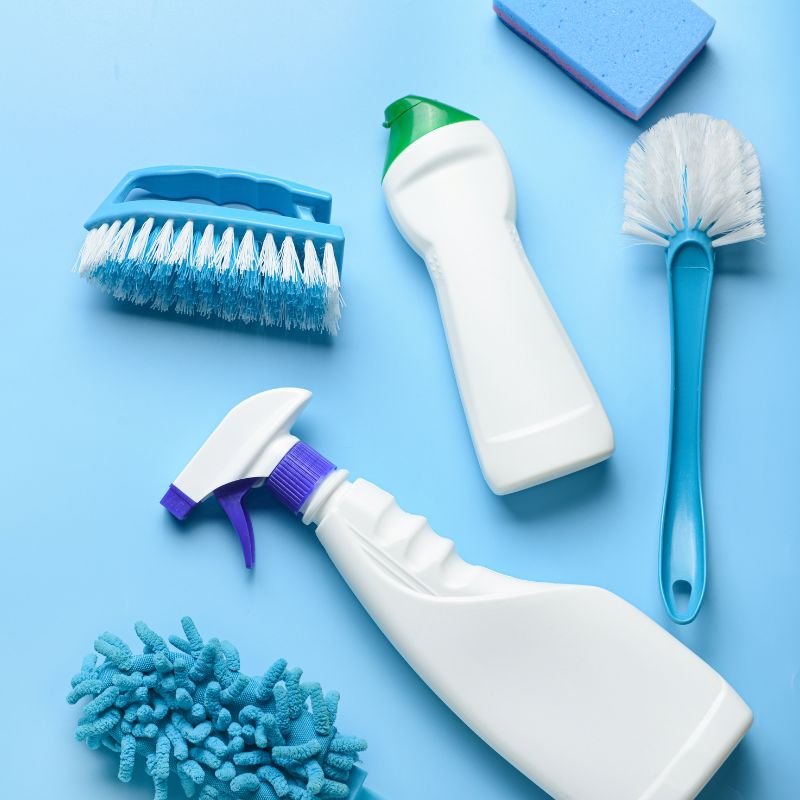
Household cleaning products
Household cleaners are designed to break down oils, grime, and residues—which makes them unfriendly to amber surfaces. Common products that should not touch amber jewelry include:
- bathroom sprays,
- kitchen degreasers,
- bleach-containing cleaners,
- strong multi-surface cleaners,
- glass cleaners with strong alcohol content.
Even brief contact can leave the surface looking duller, especially if the jewelry is then rubbed or scrubbed.
Avoid: wearing amber jewelry while cleaning the bathroom, kitchen, or using chemical sprays.
Sanitizers and solvents (often forgotten)
Hand sanitizer is a frequent culprit, especially for rings. Many sanitizers are alcohol-based, and repeated contact can contribute to surface dulling. Additionally, avoid:
- acetone (nail polish remover),
- paint thinners and solvents,
- harsh workshop chemicals.
Avoid: letting sanitizer repeatedly soak the area around amber rings or amber bracelets.
Sports and Sweat: Why Active Wear Ages Amber Faster

Sweat + friction = faster surface wear
Sweat itself is not the only issue. The problem is the combination of sweat, skin oils, friction, and dust. During sports and workouts, amber jewelry experiences:
- constant movement and rubbing,
- contact with clothing and equipment,
- moisture from sweat,
- higher chances of knocks and drops.
That is why amber bracelets and amber rings often show wear faster when worn to the gym.
Avoid: wearing amber jewelry during workouts, running, cycling, or any activity with repeated impact or rubbing.
Heat during exercise amplifies the effect
Exercise increases body heat, and that warmth plus sweat can accelerate the “tired” look. Therefore, if you want your amber to stay glossy, treat sports like a high-risk environment.
Physical Abrasion: The Everyday Scratches You Don’t Notice Until Later

Micro-scratches from daily life
Amber can pick up micro-scratches more easily than harder stones. You may not see them immediately, but they scatter light and reduce clarity. Common causes include:
- bracelets rubbing on desks while typing,
- rings touching keys, coins, or metal zippers,
- necklaces rubbing against collars, scarves, or rough fabrics.
Layering jewelry (pieces rubbing together)
Layering is stylish, but when metal chains or pendants rub against amber repeatedly, the surface gradually becomes less reflective.
Avoid: constant rubbing from layering multiple pieces too tightly, especially around the neckline.
Sleeping in jewelry
Sleeping with jewelry adds pressure, twisting, and friction. Over weeks and months, this can increase micro-wear—especially for bracelets and rings.
Avoid: sleeping in amber jewelry if you want to maintain a “like new” finish.
Jewelry Types: Which Pieces Are Most at Risk?
Different jewelry types face different exposures, so it helps to think in practical terms.
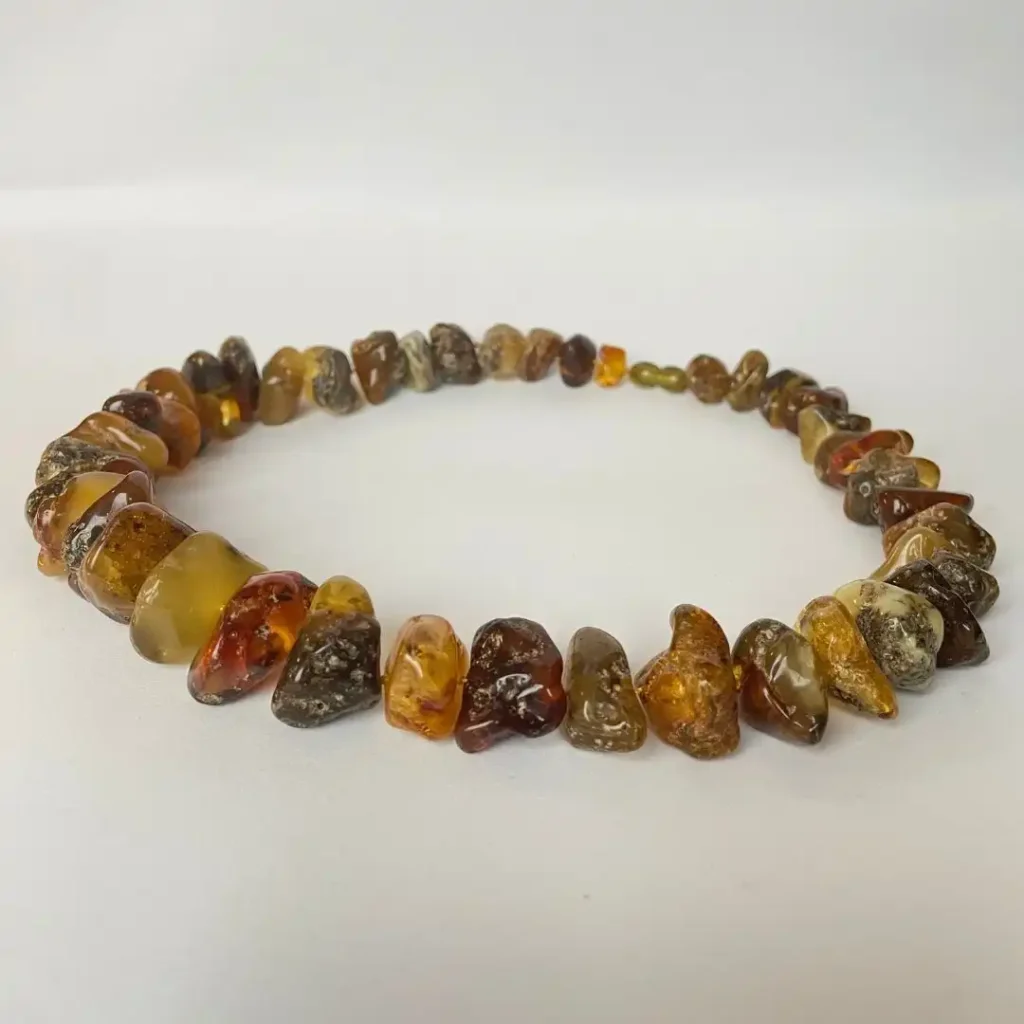
Amber necklaces
Most at risk from:
- perfume and hairspray,
- cosmetics and sunscreen on the neck,
- sun exposure during summer,
- friction from collars and scarves.
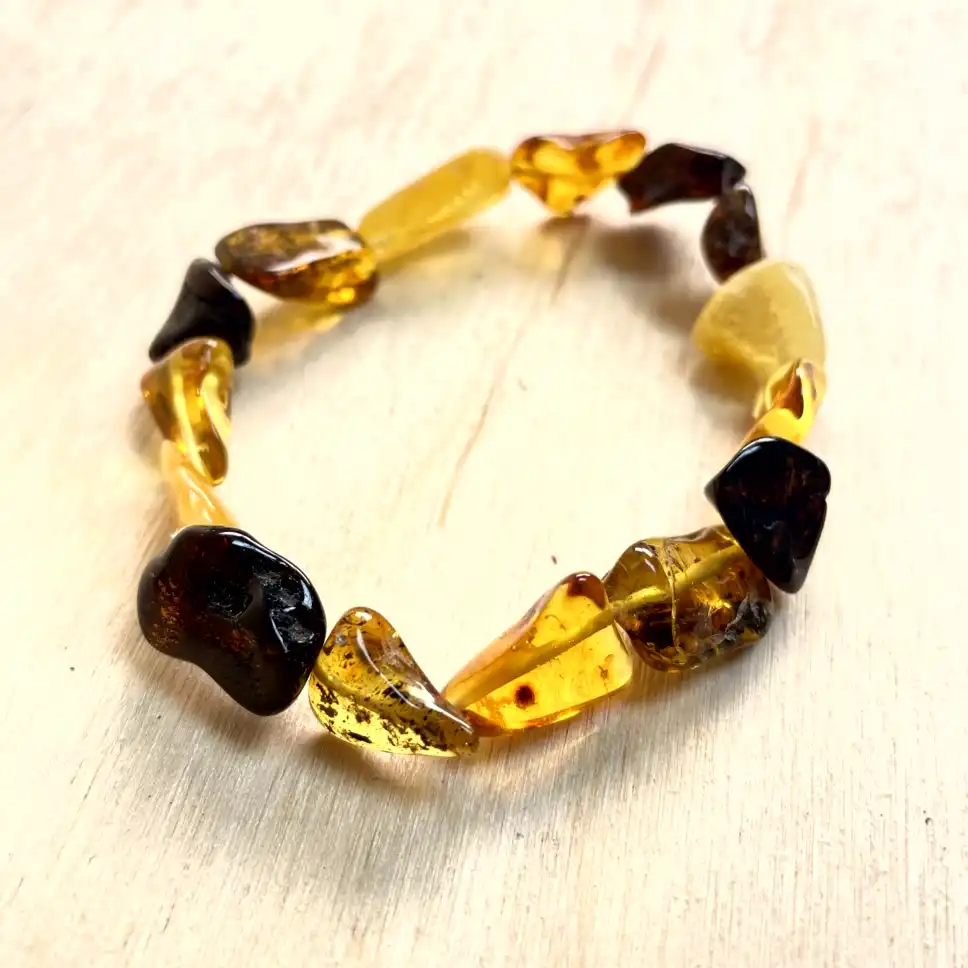
Amber bracelets
Most at risk from:
- household cleaners,
- sanitizers,
- desk friction while working,
- sweat and sports,
- pool exposure.
Amber rings
Most at risk from:
- sanitizer and soaps,
- knocks and impacts,
- cleaning chemicals,
- frequent contact with lotions and oils.
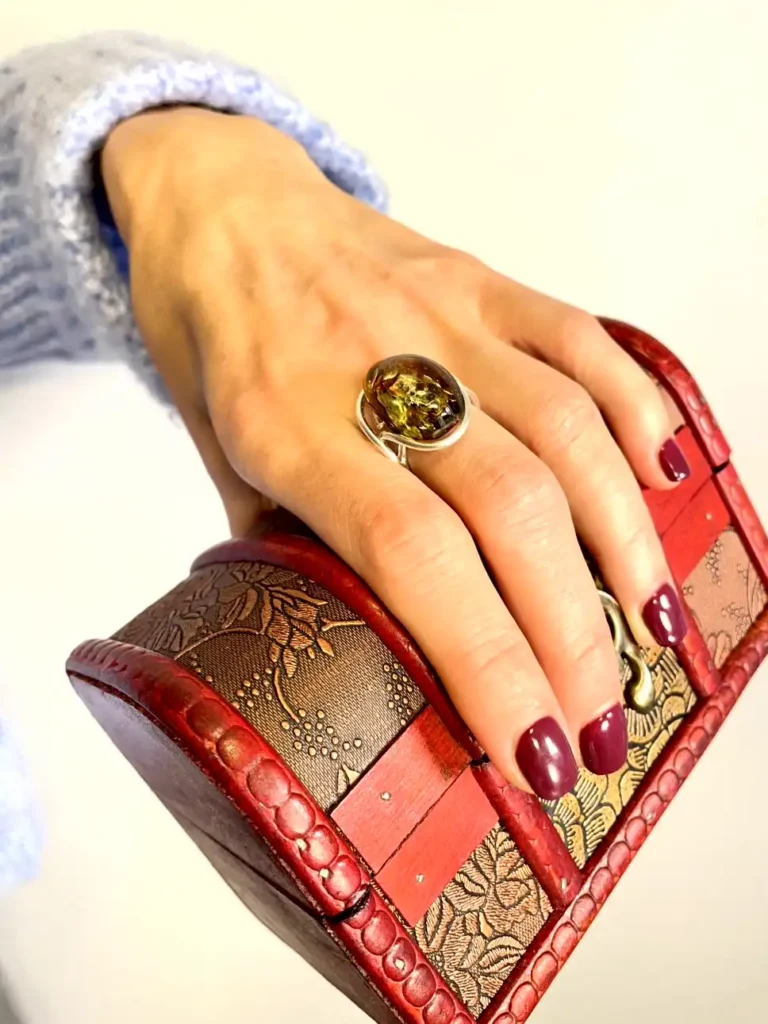
In other words, whether you wear amber bracelets, amber necklaces, or amber rings, the damage risk depends on where the piece sits and what it touches daily.
What to Do After Accidental Exposure (Quick, Simple, Non-Technical)
This article focuses on what damages amber, not detailed cleaning. Still, accidents happen. If amber touches chlorine, perfume, or a household cleaner:
- Rinse briefly with lukewarm water (not hot, not icy).
- Pat dry with a soft cloth.
- Let it rest away from sun and heat.
Instead of scrubbing aggressively or using harsh products to “fix” it, aim to remove the exposure gently and stop repeat contact.
FAQ: The Most Common Questions About What Damages Amber Jewelry
Can amber jewelry get wet?
In most cases, brief contact with water is usually fine. However, the bigger risk is hot water combined with soaps, shampoos, and friction (like in a shower).
Can I wear amber jewelry in a swimming pool?
It’s best not to. In particular, chlorine is one of the most damaging exposures for amber’s surface appearance and shine.
Does sunlight damage amber jewelry?
Over time, repeated sun and UV exposure can contribute to dulling and a less glossy look—especially if jewelry is left in direct sunlight for hours.
Can I wear amber jewelry in a sauna?
Generally, avoid it. Sauna heat is a high-risk environment, and repeated exposure can reduce shine over time.
Do perfume and hairspray damage amber?
Yes, they can. For example, perfume and hairspray often leave residue or contain alcohols that dull the surface and attract dust.
Does sunscreen or lotion ruin amber jewelry?
It can make amber look cloudy or muted by leaving a film on the surface. Therefore, let skincare absorb fully before wearing amber jewelry.
Does sweat damage amber jewelry?
In practice, sweat plus movement and friction during sports can speed up surface wear. As a result, it’s best to remove amber jewelry before workouts.
What household products should never touch amber jewelry?
Avoid household cleaners, bleach-based products, degreasers, strong alcohol cleaners, acetone, and solvents.
Why does my amber jewelry look dull or “tired”?
Most often it’s a combination of micro-scratches (abrasion), residue from cosmetics/perfume, and exposure to heat, UV, chlorine, or cleaning chemicals.
Conclusion: The Best Protection Is Avoiding the Right Exposures
Amber jewelry stays beautiful when it’s kept away from the exposures that dull it fastest. The biggest culprits are prolonged sunlight and UV, high heat and temperature shocks, perfume/hairspray/cosmetics, chlorine in pools, household cleaners, and wear from sports and sweat. Additionally, everyday friction—layering, desk contact, sleeping in jewelry—can make amber lose its glow far sooner than you expect.
You don’t need complicated routines. Instead, you just need awareness. Avoid the pool, avoid harsh chemicals, avoid applying perfume or hairspray while wearing amber jewelry, remove it for sports, and keep it away from heat and extreme temperature changes. Do that, and your amber jewelry will keep its warm, natural brilliance for years.