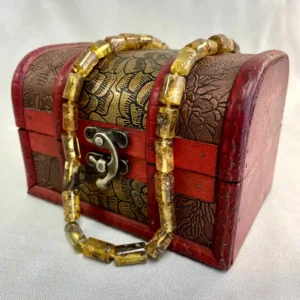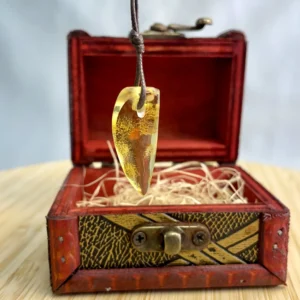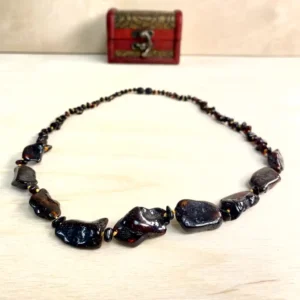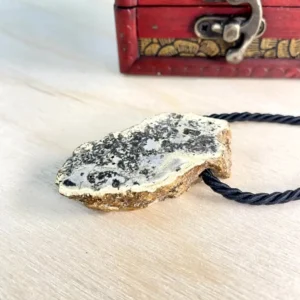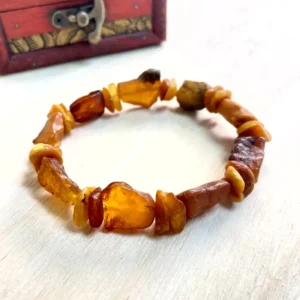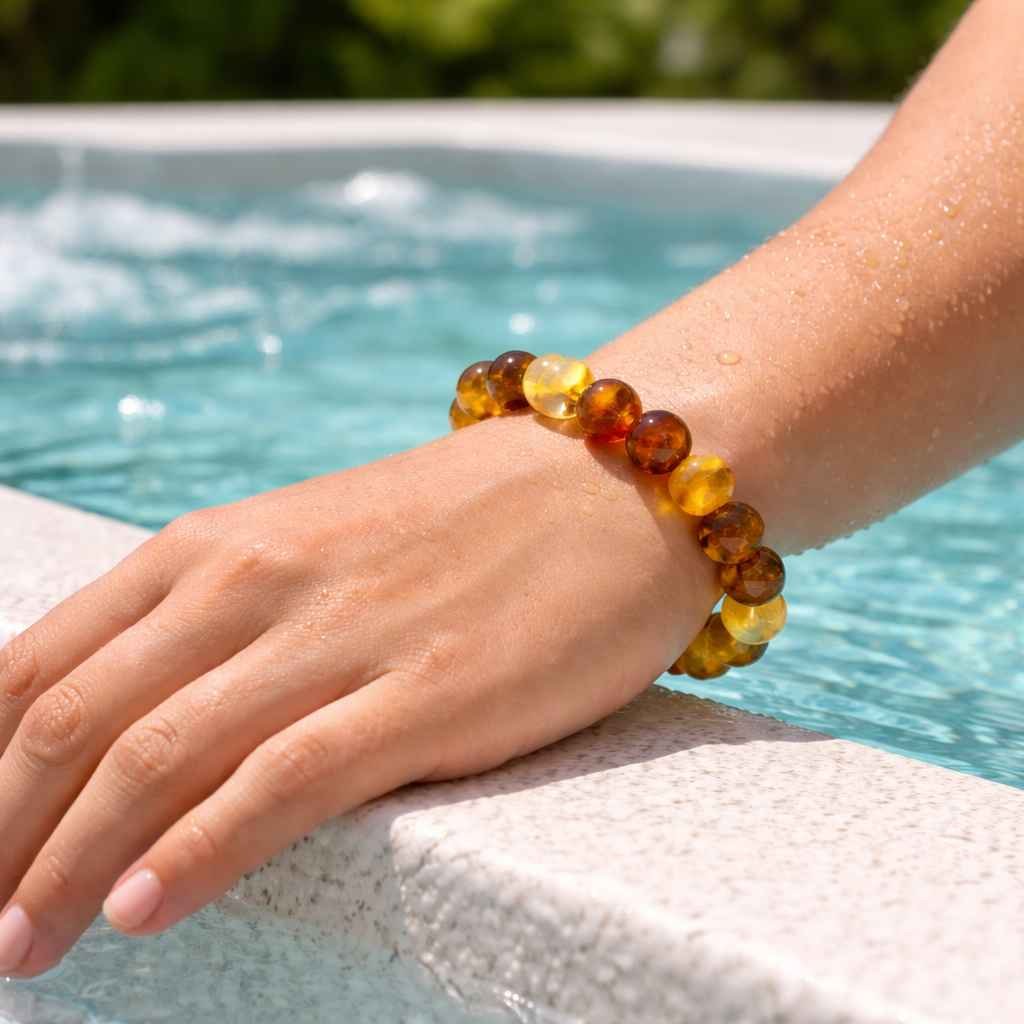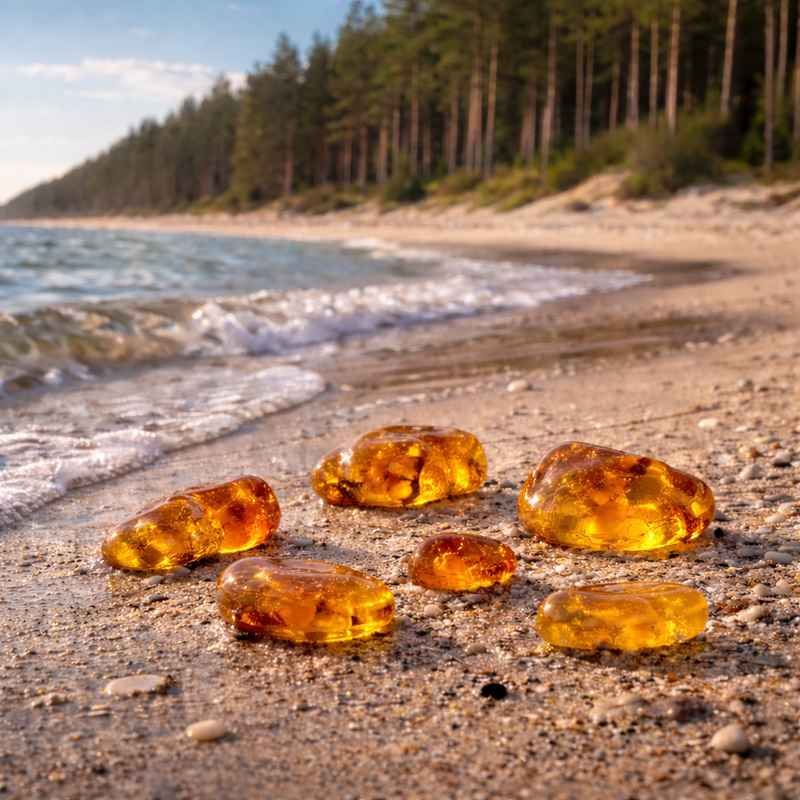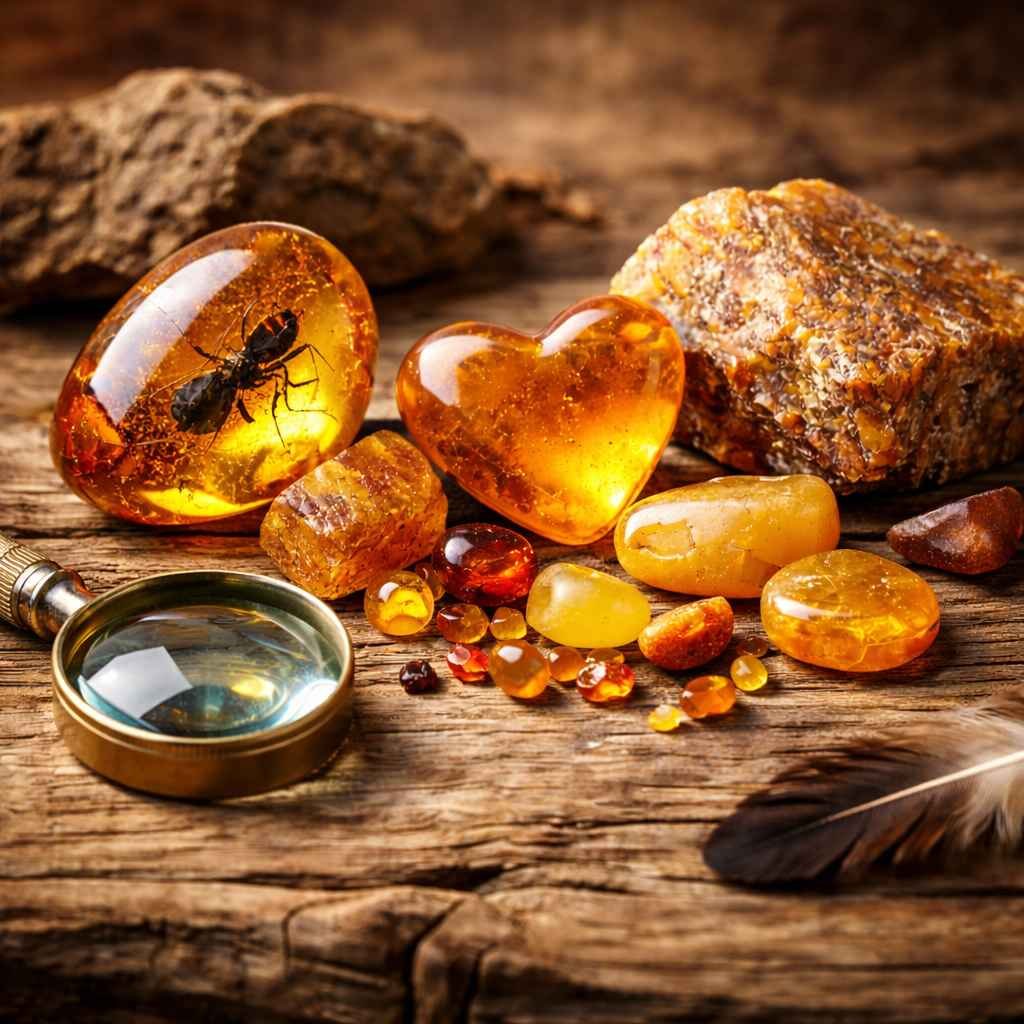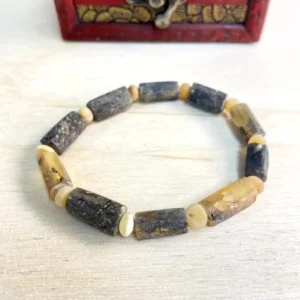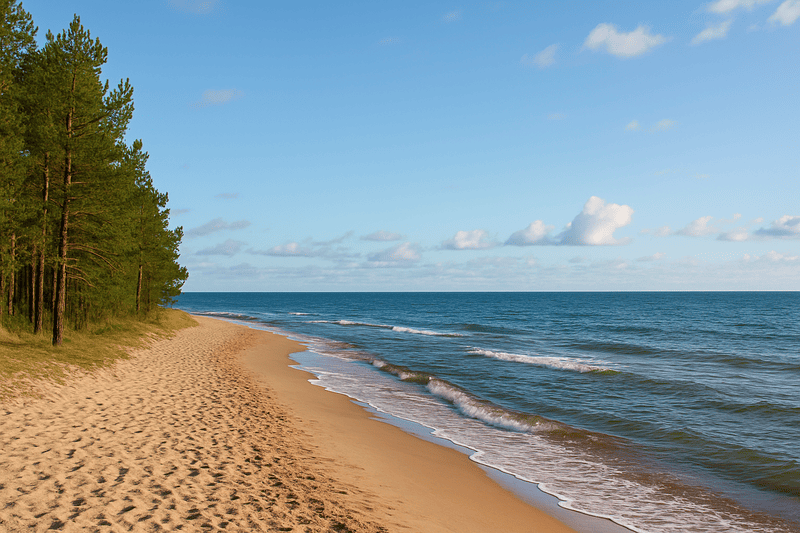
When someone holds a glowing piece of Baltic amber — perhaps in a Baltic amber necklace, bracelet, or ring — the surface light, warmth, and depth immediately suggest ancient origins. But what exactly composes this golden fossil? In other words: what is Baltic amber made of?
In this article, we unravel the molecular, elemental, and structural makeup of Baltic amber. We explain how its resinous origin transforms into a stable fossil, what makes it distinct, and how its properties contribute to its use in Baltic amber jewelry. This is a strictly scientific exploration — no spiritual claims and no care advice — just the natural chemistry of Baltic amber presented clearly and precisely.
Amber: Definition and Resin Origins
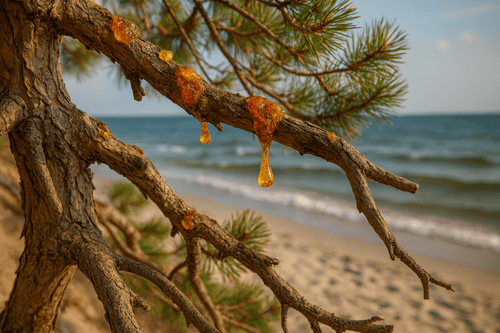
To understand what Baltic amber is made of, we start at the beginning: amber is fossilized tree resin, not sap. Resin is a protective, sticky secretion from trees that seals wounds and repels insects. Over millions of years — and under the right conditions — certain resins fossilize into amber.
Resin differs from sap: sap transports nutrients, while resin protects the tree. When resin exuded, was buried, and experienced geological pressure, it gradually lost volatile compounds, polymerized, and became chemically stable.
In the case of Baltic amber, the original resin came from conifer trees. Most studies suggest labdanoid diterpenes such as communic acid and communol as the main precursors.
Chemical Composition: The Building Blocks of Baltic Amber
Understanding the elemental and molecular structure is essential for knowing what Baltic amber is made of.
Elemental Composition
In general, Baltic amber (often called succinite) is composed approximately of:
- Carbon (C): ~61% to 81%
- Hydrogen (H): ~8.5–11%
- Oxygen (O): remaining percent to complete 100% (in many sources ~7–10%)
- Sulfur (S): small fractions, around ~0.25% in some analyses
Thus, the elemental ratio is mainly C–H–O, with trace sulfur and occasional impurities.
Succinic Acid (the defining marker)
The most distinctive chemical marker of Baltic amber is succinic acid (C₄H₆O₄). Baltic amber contains 3% to 8% succinic acid by weight, depending on weathering, sample location, and layer depth.
Because of its high succinic acid content, Baltic amber is known as succinite.
Some studies note that deeply weathered exterior zones may show slightly higher concentrations of succinic acid.
In contrast, many other fossil resins (non-Baltic ambers), known as retinites, lack or contain only minimal succinic acid.
Molecular / Polymer Structure
Baltic amber is not crystalline; instead, it has an amorphous macromolecular structure. It is essentially a highly cross-linked polymer of resin acids.
The primary resin components are labdanoid diterpenes (communic acid, communol) that form polymers and copolymers, alongside succinic acid units.
Over time, crosslinking, cyclization, and molecular rearrangements stabilize the resin into a hard, durable fossil.
Furthermore, some soluble fractions include volatile oils, resin acids, and insoluble bituminous components.
Thus, Baltic amber is best understood as a complex organic polymer system, not a simple molecular formula.
Physical & Structural Properties Linked to Composition
Understanding what Baltic amber is made of helps explain its physical behavior. Here are key physical properties shaped by its chemistry.
Hardness and Density
- Hardness: ~2.0–2.5 on the Mohs scale
- Density / Specific Gravity: typically 1.05–1.10 g/cm³
- Melt / Decomposition Point: amber begins to soften or decompose above ~250–300 °C, producing “amber oil.”
Because amber is light compared to many stones, it can float in salty water and is easy to handle and polish.
Optical & Textural Features
Amber often contains microscopic air bubbles, which create opaqueness or cloudiness. In white (bony) amber, bubble density can reach hundreds of thousands per square millimeter.
Transparency depends on:
- resin clarity
- number of inclusions
- degree of oxidation
- level of polymer crosslinking
Additionally, the outer surface (cortex) often weathers differently than the inner core, sometimes concentrating succinic acid at the exterior.
Infrared / Spectroscopic Signatures
Baltic amber is commonly identified by Infrared Spectroscopy (IR) because it shows characteristic absorption bands — particularly carbonyl and carboxyl signals — associated with succinic acid and resin acids.
These IR features help distinguish Baltic amber from other fossil resins and synthetic imitations.
Moreover, nuclear magnetic resonance (NMR) and pyrolysis GC-MS are also used to analyze soluble fractions.
Botanical Source: Which Trees Produced Baltic Amber?
Knowing what Baltic amber is made of also means identifying which species produced the resin originally.
Historically, researchers considered Pinites succinifer, a pine-like tree, as the source.
More recent proposals, based on spectral analysis and comparative chemistry, suggest that the resin may derive from conifers of the Sciadopityaceae family, possibly mixed with other resin-producing lineages.
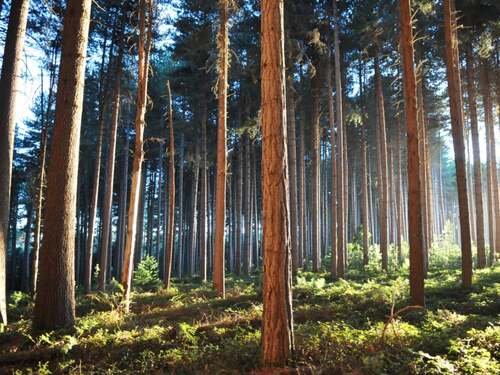
Because Baltic amber is a co-polymer with multiple resin precursors, its resin likely came from a mix of related species in the Eocene forests of northern Europe.
Thus, Baltic amber is made from a complex biological heritage, not a single tree.
How Amber Chemical Composition Influences Jewelry Use
Understanding what Baltic amber is made of clarifies why it is suitable for Baltic amber jewelry, including necklaces, bracelets, and rings.
Its moderate hardness (2–2.5) allows cutting, shaping, and polishing without excessive brittleness.
Its low density makes jewelry lighter and more comfortable to wear.
The presence of succinic acid and a stable polymer structure gives Baltic amber durability and resistance to degradation.
Its optical clarity and resin properties allow it to preserve internal inclusions — insects, plant parts — without structural breakdown.
Because of these chemical and structural advantages, Baltic amber remains one of the premier materials for high-quality jewelry.
Variability, Impurities & Treatment
While Baltic amber is defined by a core composition, individual pieces may vary due to impurities, oxidation, or minor treatment.
Possible impurities include:
- clays
- organic soil matter
- mineral inclusions
- sulfur compounds
Weathered surfaces may show altered chemical composition (e.g., slightly higher succinic acid concentration).
Additionally:
- Pressed / reconstructed amber is created by heating and pressing small fragments; chemically it remains a succinite derivative.
- Treated amber — through dyeing, heat treatment, or crack filling — may have altered surfaces, but its core composition remains recognizable via spectroscopy.
These variations are important for identifying genuine Baltic amber.
Why “What Is Baltic Amber Made Of” Matters to Collectors & Scientists
For both collectors and researchers, understanding what Baltic amber is made of is important because it affects authenticity, value, and scientific insight.
- Authentication: Succinic acid content and IR signatures help distinguish genuine Baltic amber from fakes.
- Scientific insight: Composition reveals evolutionary, botanical, and climate history of Eocene forests.
- Jewelry value: Pieces with stable chemical integrity, clarity, and preserved inclusions are more prized in Baltic amber necklaces, bracelets, and rings.
Collectors who understand what Baltic amber is made of can better evaluate origin certificates, identify imitations, and appreciate the rarity of genuine succinite.
Frequently Asked Questions
Q1: What is Baltic amber made of compared to other ambers?
Baltic amber (succinite) contains 3–8% succinic acid and is a co-polymer of resin acids such as communic acid and communol. Other ambers (retinites) lack or contain minimal succinic acid.
Q2: Is succinic acid unique to Baltic amber?
It is not entirely unique, but the high proportion (3–8%) in Baltic amber clearly distinguishes it from most other types of amber.
Q3: Can chemical testing confirm genuine Baltic amber?
Yes — methods like Infrared Spectroscopy (IR), Pyrolysis GC-MS, and Nuclear Magnetic Resonance (NMR) can detect characteristic absorption bands and chemical markers that confirm authenticity.
Q4: Does Baltic amber have a defined chemical formula?
No — there is no single fixed formula because it is a complex natural polymer. However, elemental composition and succinic acid content define its scientific classification.
Q5: How does composition affect appearance?
Air bubbles, oxidation, minor impurities, and crosslinking variations influence clarity, color, and opacity.
Q6: Does composition differ between amber jewelry types (bracelets, necklaces, rings)?
No — the base composition remains the same. Differences lie in clarity, cut, polish, and aesthetic selection, not in chemical makeup.
Final Thoughts: The Chemistry of Time in Amber
When you hold a piece of Baltic amber, you’re not just holding a warm yellow gem. You’re holding a molecular archive: a fossil polymer of resin acids, crosslinked over millions of years, containing succinic acid, trace elements, air bubbles, and even ancient life.
To answer the question what is Baltic amber made of — it is made of carbon, hydrogen, oxygen, and trace sulfur, formed from copolymers of resin acids, stabilized by succinic acid, and shaped by geological pressure and time. This chemical architecture gives Baltic amber its beauty, durability, and value — making it one of the most fascinating materials on Earth.
In jewelry form — whether Baltic amber necklaces, bracelets, or rings — that molecular legacy remains intact, invisible yet foundational, linking natural chemistry to human artistry.