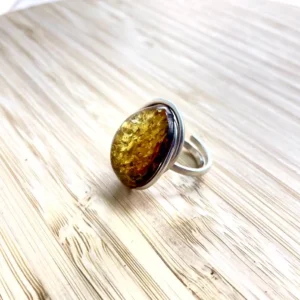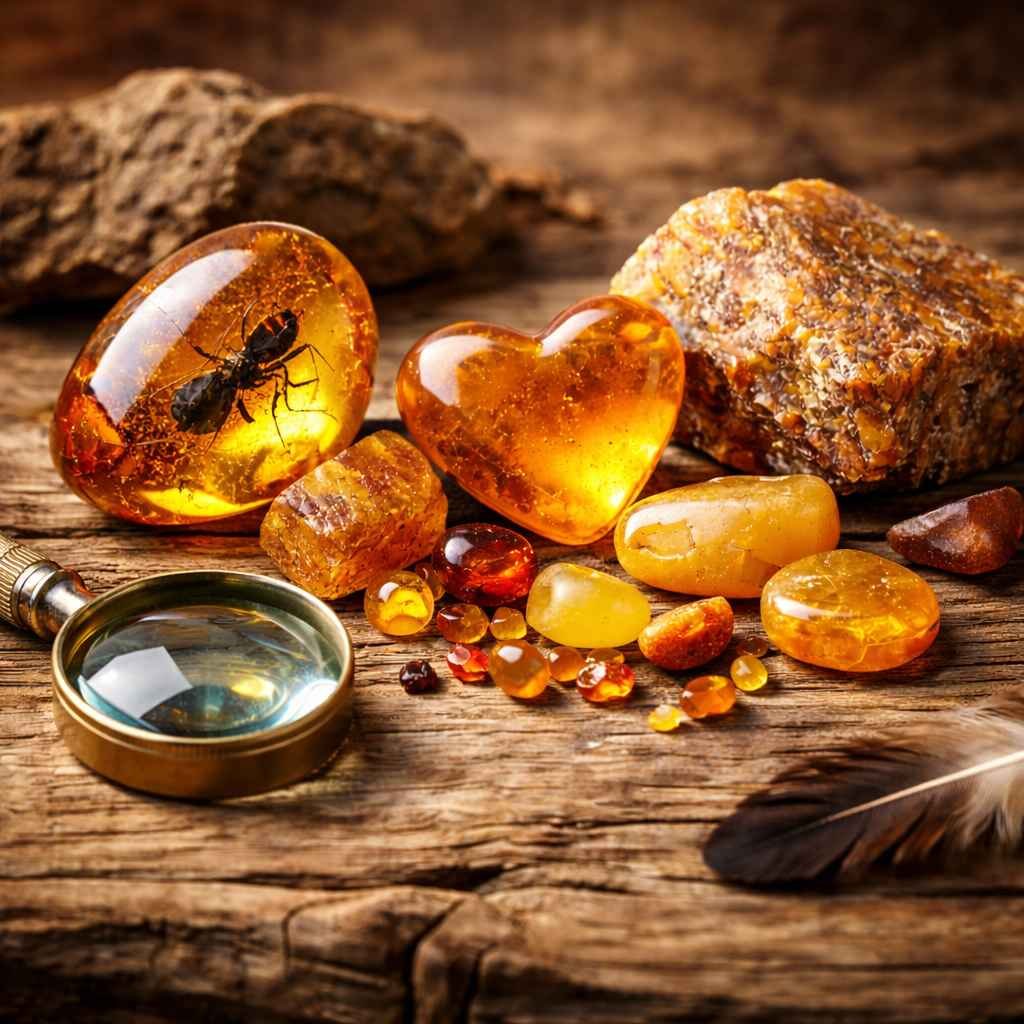
Amber is one of the most distinctive natural materials known to humans. Unlike gemstones that crystallize deep underground, amber originates from ancient tree resin, giving it unique physical, chemical, and optical properties. These characteristics explain why amber has been valued for jewelry, rituals, and scientific research for thousands of years.
By understanding amber properties, it becomes easier to recognize what makes this material special, how it behaves, and why it must be treated differently from mineral gemstones.
What Is Amber?
Amber is fossilized tree resin that formed millions of years ago. When prehistoric trees were damaged, they released resin to protect themselves from insects, fungi, and environmental stress. Under rare conditions, this resin avoided decay and slowly hardened over geological time.
Amber is organic rather than mineral. This single fact explains many of its defining properties, including its low hardness, warmth to the touch, and sensitivity to chemicals and heat.
How Amber Forms Over Time
The Fossilization Process
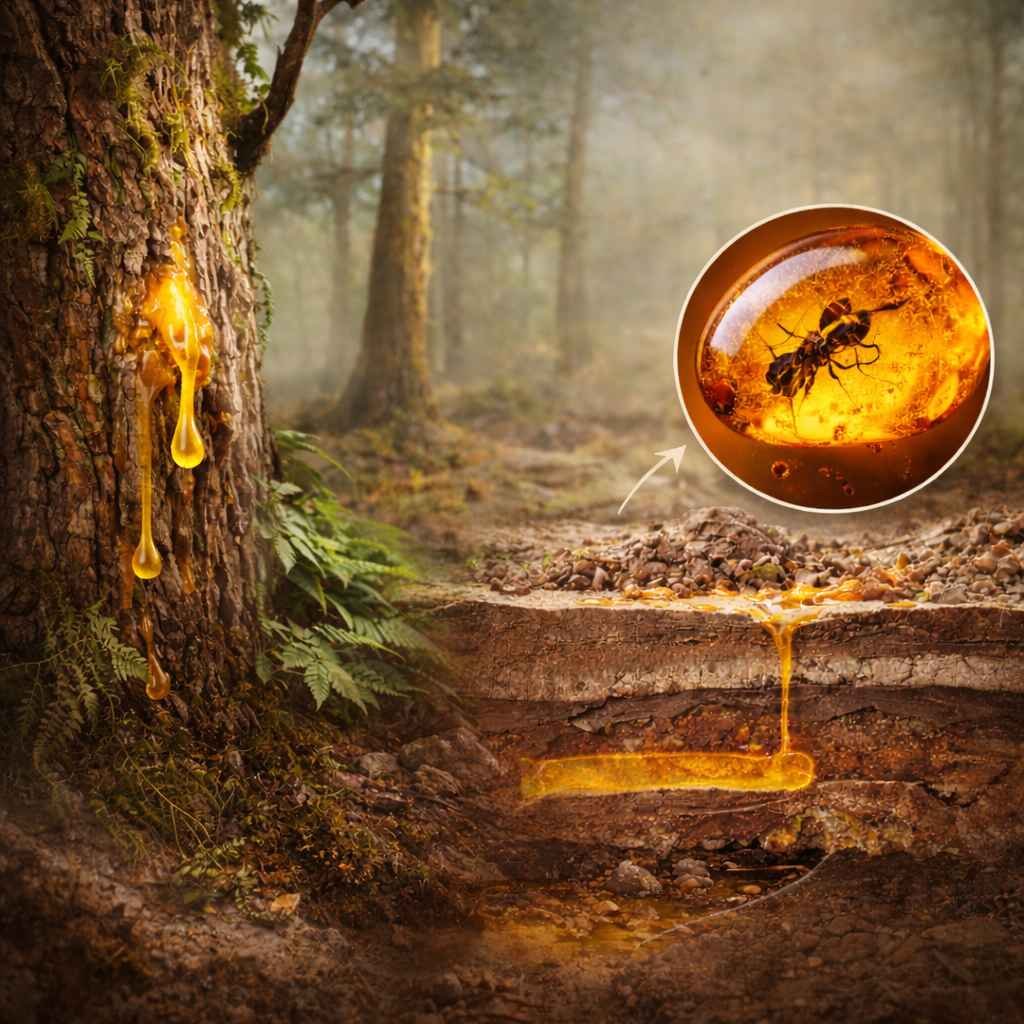
The transformation of liquid resin into solid amber typically requires tens of millions of years. This process occurs gradually and depends on very specific environmental conditions.
- Resin secretion: Trees release resin to seal wounds and deter insects. The resin is sticky and rich in organic compounds.
- Trapping organic matter: While still soft, resin may trap insects, plant fragments, pollen, or microorganisms, sealing them away from oxygen.
- Burial under sediment: Over time, resin becomes buried under layers of soil, sand, or clay, protecting it from weathering.
- Polymerization: Pressure, heat, and oxygen cause chemical changes that harden and stabilize the resin.
- Formation of amber: The resin becomes fully fossilized, transforming into amber with long-term structural stability.
This slow process is why amber can preserve prehistoric organisms with remarkable clarity.
Physical Amber Properties
Lightweight Structure
Amber has a very low density compared to mineral gemstones. This means it feels surprisingly light when held or worn.
Because of this property, amber jewelry is comfortable even in larger pieces, and genuine amber can float in saltwater, a characteristic often used to help distinguish it from glass or plastic imitations.
Warm to the Touch
Amber feels warm almost immediately when touched. This happens because amber has low thermal conductivity, meaning it does not rapidly draw heat away from the skin.
This warmth contributes to amber’s long-standing association with comfort, protection, and healing in many cultures.
Hardness and Durability
On the Mohs hardness scale, amber ranks around 2–2.5. This makes it significantly softer than quartz, sapphire, or diamond.
- Amber can be scratched by metal or harder stones
- It requires gentle handling and careful storage
- Jewelry designs often protect the surface with bezels or settings
Understanding this softness is essential for proper care and long-term preservation.
Optical Properties of Amber
Natural Color Variations
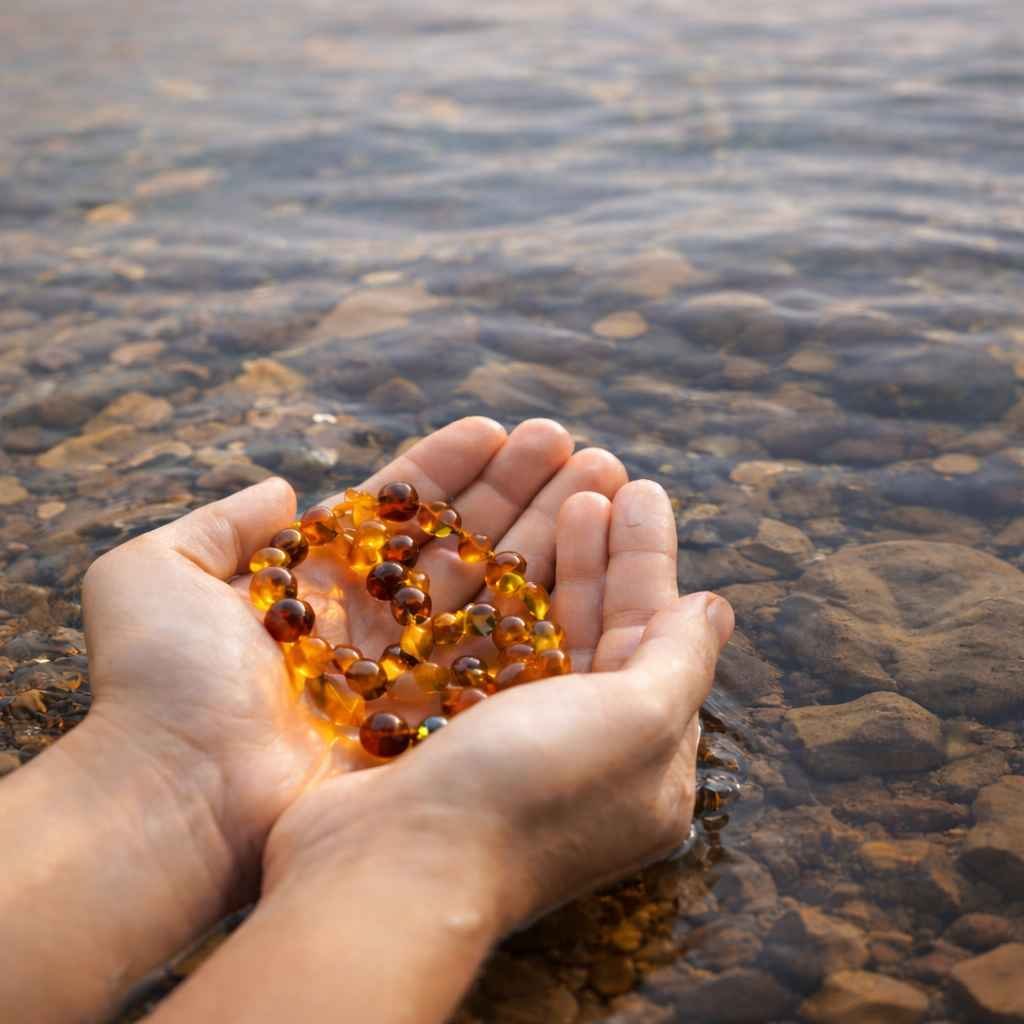
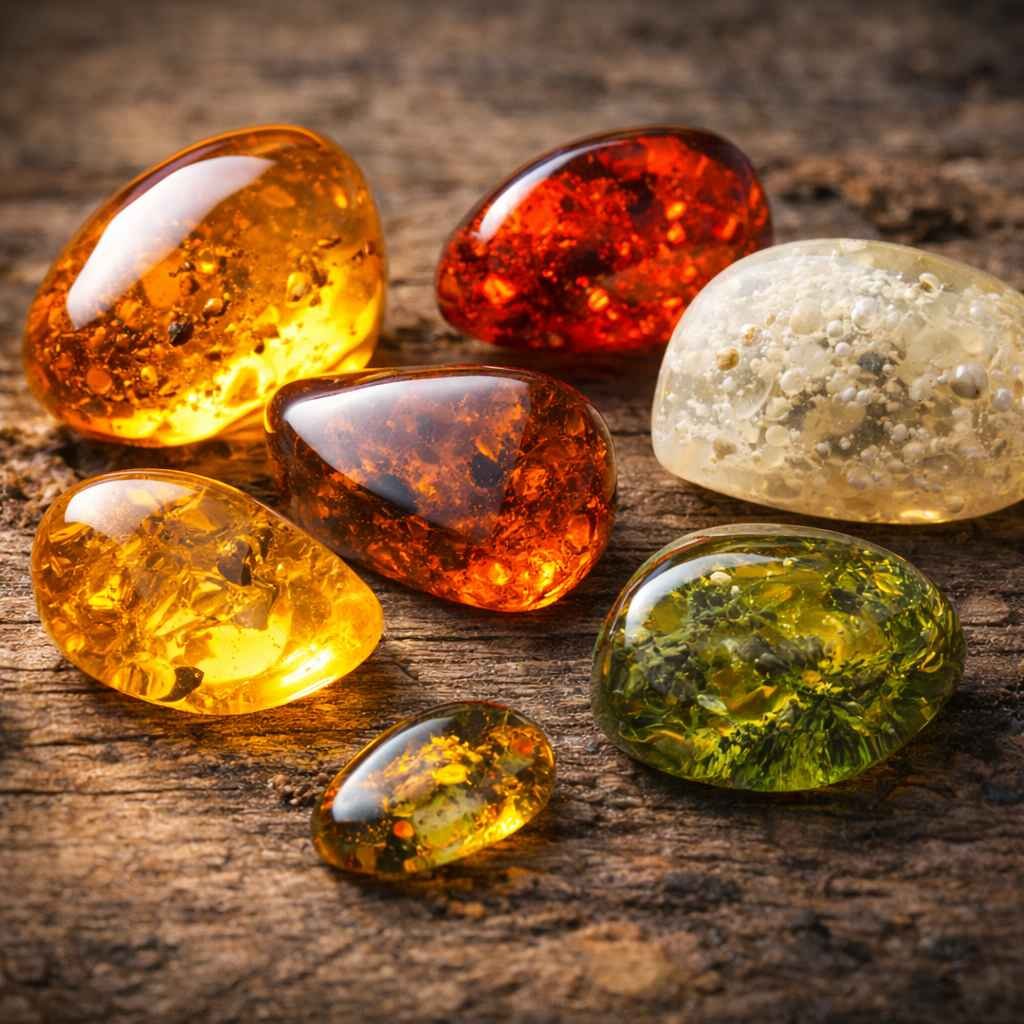
Amber occurs in a wide range of natural colors, each influenced by internal structure and environmental factors:
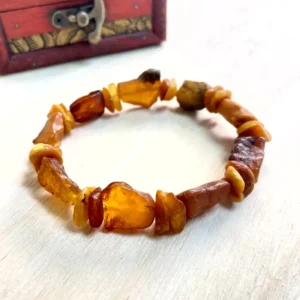
- Golden and honey tones caused by clear resin and minimal inclusions
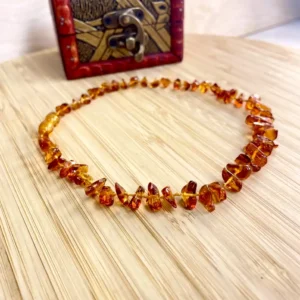
- Cognac and brown shades formed through oxidation
- Cherry and red hues often resulting from heat or pressure exposure
- Milky white amber created by microscopic air bubbles
- Greenish hues produced by plant inclusions rather than actual green pigment
Amber color is not determined by minerals, but by organic structure and trapped material.
Transparency and Light Interaction
Amber may appear transparent, translucent, or opaque. Milky varieties scatter light due to internal air bubbles, while clear amber allows light to pass through almost unobstructed.
Electrical and Static Properties
Electrostatic Behavior
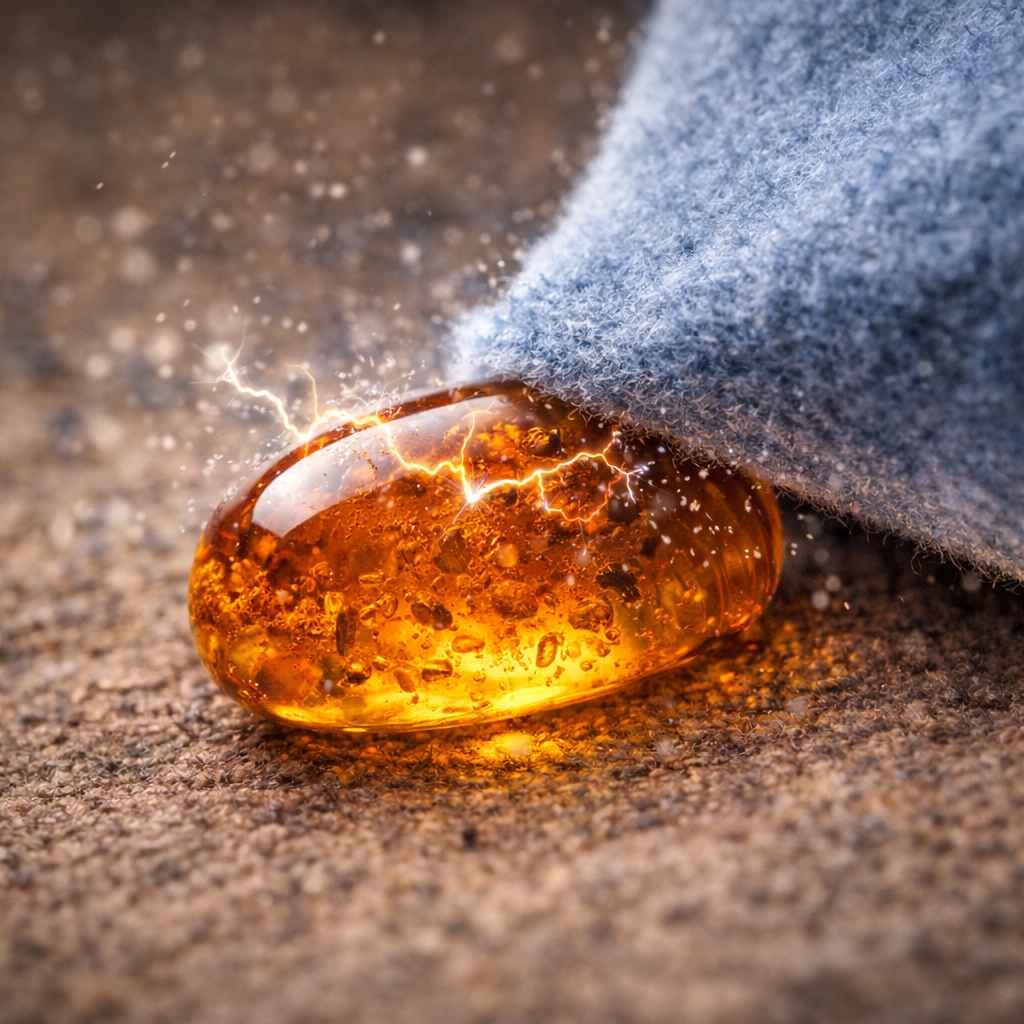
When rubbed with fabric, amber can develop a static electrical charge. This allows it to attract lightweight particles such as dust or paper.
This behavior was observed in ancient times and gave rise to the Greek word “elektron,” which later became the root of the word “electricity.”
Chemical Properties of Amber
Organic Composition
Amber consists primarily of carbon, hydrogen, and oxygen. Many varieties also contain succinic acid, especially amber from the Baltic region.
Succinic acid has been widely studied and is often cited in traditional and historical uses of amber.
Solubility and Chemical Sensitivity
Amber reacts differently to substances than mineral gemstones:
- It does not dissolve in water
- It may soften or degrade when exposed to alcohol
- Harsh chemicals can permanently damage the surface
For this reason, amber should only be cleaned with mild soap and lukewarm water.
Thermal Properties
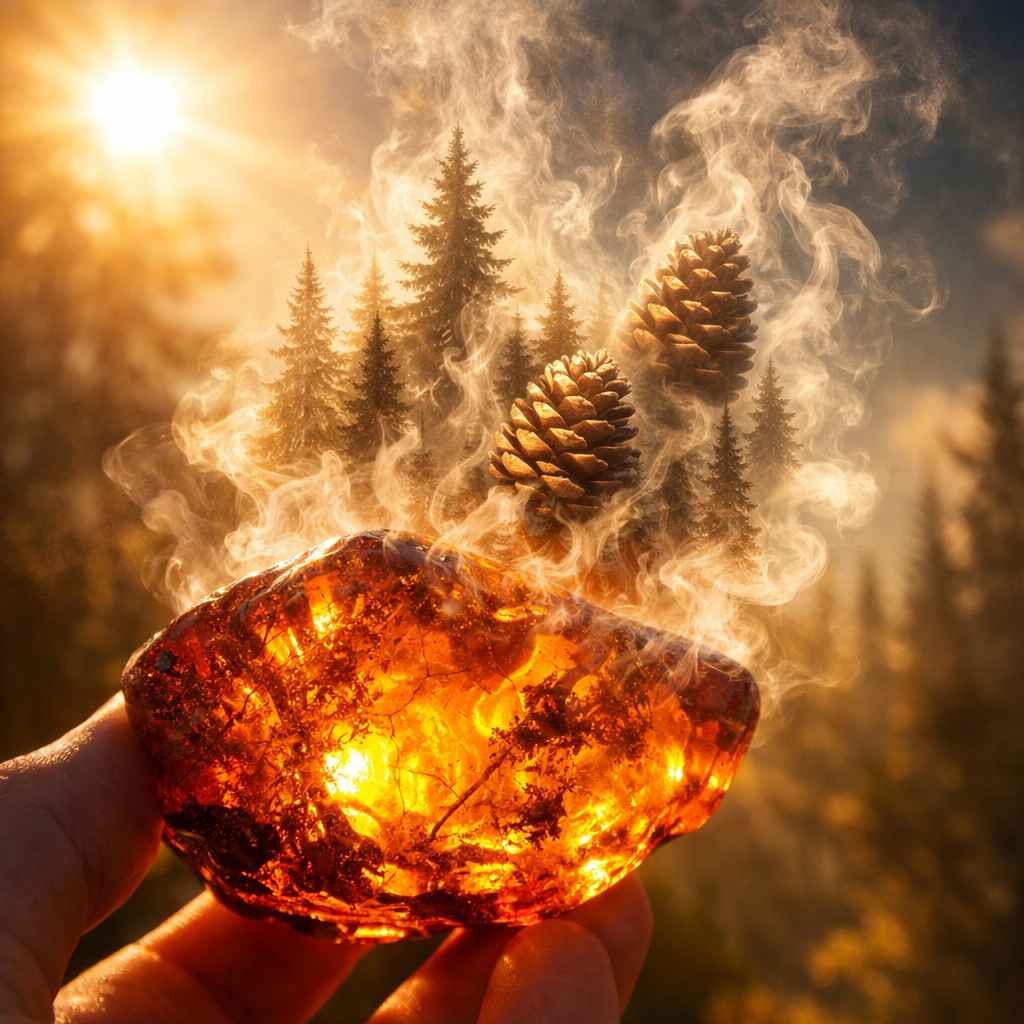
Amber is highly sensitive to heat. When exposed to elevated temperatures:
- It may soften or deform
- Burning amber releases a resinous, pine-like aroma
- Rapid temperature changes can cause cracking
These reactions further confirm amber’s organic origin.
Biological and Scientific Importance
Preserved Inclusions
Amber is uniquely valuable to science because it can preserve ancient life forms in three dimensions.
- Insects with visible anatomy
- Plant fragments and pollen grains
- Fungi and microorganisms
These inclusions provide direct evidence of prehistoric ecosystems, offering insights unavailable from fossils alone.
Cultural and Historical Significance of Amber Properties
Across civilizations, amber’s properties influenced how it was used and understood.
- Its warmth led to associations with protection and vitality
- Its lightness made it ideal for wearable objects
- Its rarity increased its value in trade networks
- Its organic origin inspired spiritual symbolism
Amber Properties in Jewelry Making
Amber’s natural characteristics directly affect how it is used in jewelry.
- Lightweight pieces are comfortable for extended wear
- Softness requires protective settings
- Careful polishing preserves surface clarity
With proper care, amber jewelry can remain beautiful for generations.
How to Identify Real Amber Using Its Properties
Several observations rely on amber’s natural behavior:
- Float test: Genuine amber may float in saltwater due to low density
- Static test: Rubbing amber can cause it to attract paper
- Smell test: Gently heated amber releases a resinous scent
These tests are indicative rather than absolute, and professional verification is recommended for valuable pieces.
FAQ: Amber Properties
What makes amber different from gemstones?
Amber is organic, formed from fossilized tree resin, while gemstones are mineral-based.
Is amber considered a crystal?
No. Amber lacks a crystalline structure and is therefore not classified as a crystal.
Why does amber feel warm?
Its low thermal conductivity prevents it from drawing heat away from the skin.
Does amber contain acid?
Yes. Many ambers contain succinic acid, particularly Baltic amber.
Can amber conduct electricity?
Amber does not conduct electricity but can hold a static charge.
Is amber fragile?
Amber is softer than most gemstones and should be handled with care.
Final Thoughts on Amber Properties
Amber is a natural material shaped by biology, chemistry, and geological time. Its properties—lightness, warmth, organic composition, and ability to preserve ancient life—set it apart from all other gem materials.
Understanding amber properties allows for deeper appreciation of its scientific, cultural, and historical significance. Whether studied, collected, or worn, amber remains a tangible connection to Earth’s distant past.