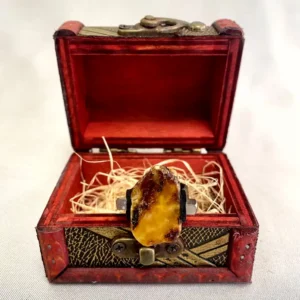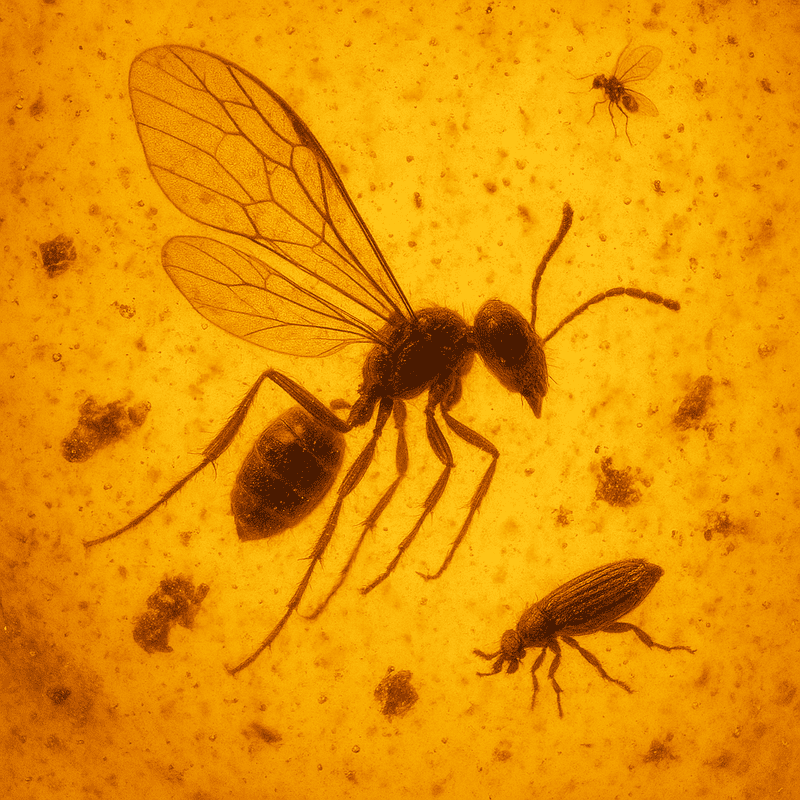
One of the most magical features of amber is its ability to trap life in time. Tiny creatures – insects, spiders, mites – can become forever frozen inside resin droplets, giving us snapshots of ecosystems from millions of years ago. These inclusions are not just curiosities – they are powerful tools for paleobiology, evolutionary biology, and understanding ancient climates.
In this article, we’ll explore:
- What amber inclusions are (especially insect inclusions)
- The physics, chemistry, and taphonomy of how insects get preserved
- What scientists have discovered from amber inclusions
- Challenges, limitations, and controversies
- Why these inclusions continue to captivate both scientists and jewelry lovers
What Are Amber Inclusions?
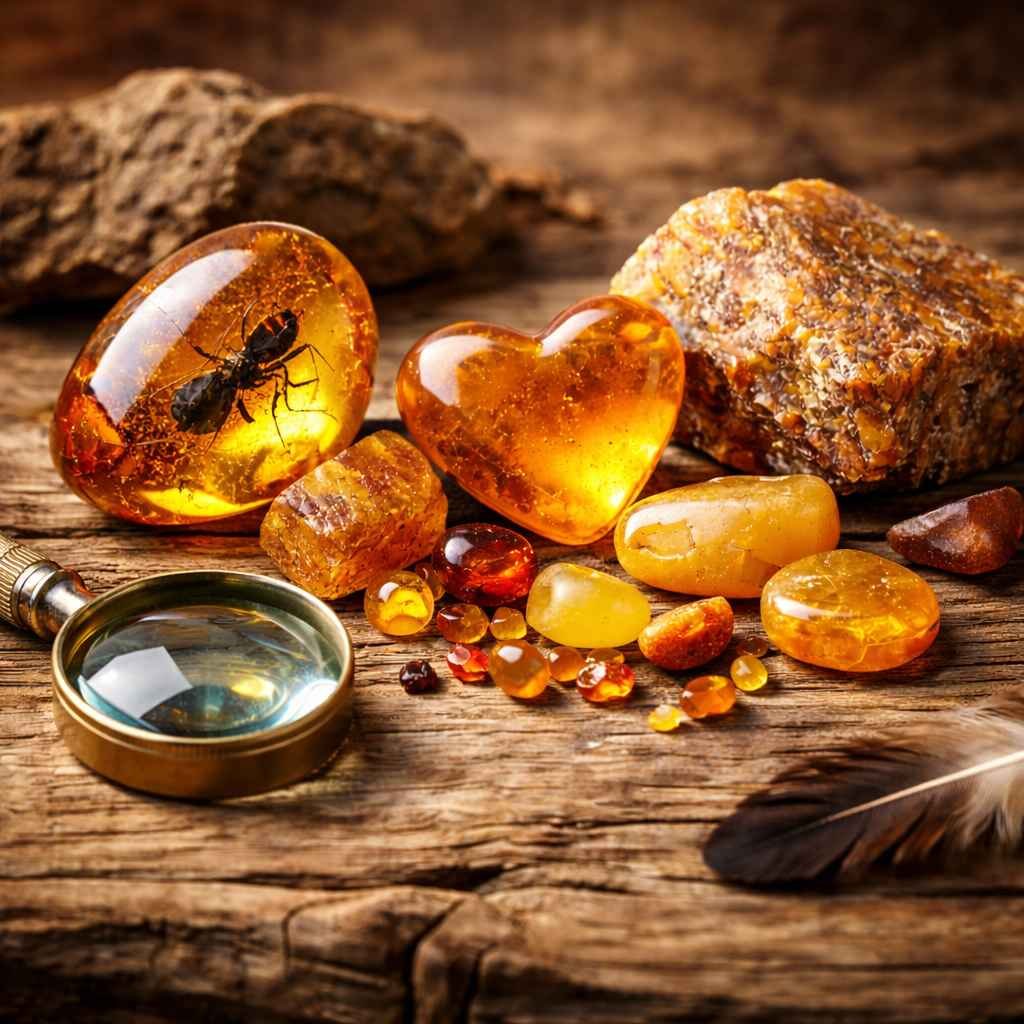
Amber inclusions are biological or organic material – such as insects, plant fragments, fungi, pollen, or microorganisms – that became trapped in tree resin and were preserved as that resin fossilized into amber.
In many ambers, insects (arthropods) are the most common inclusions.
Because amber preserves soft tissues, delicate structures like hairs, wings, and membranes – which rarely fossilize otherwise – can remain visible under microscopy.
Inclusions are sometimes called bioinclusions (living things) or syninclusions (when multiple organisms are trapped in the same resin flow).
The American Museum of Natural History notes that amber’s microscopic fidelity enables extremely accurate estimates of evolutionary change over millions of years.
Because these inclusions come from a resin context – rather than sedimentary rock – they often preserve three-dimensional geometry, not just compressed outlines.
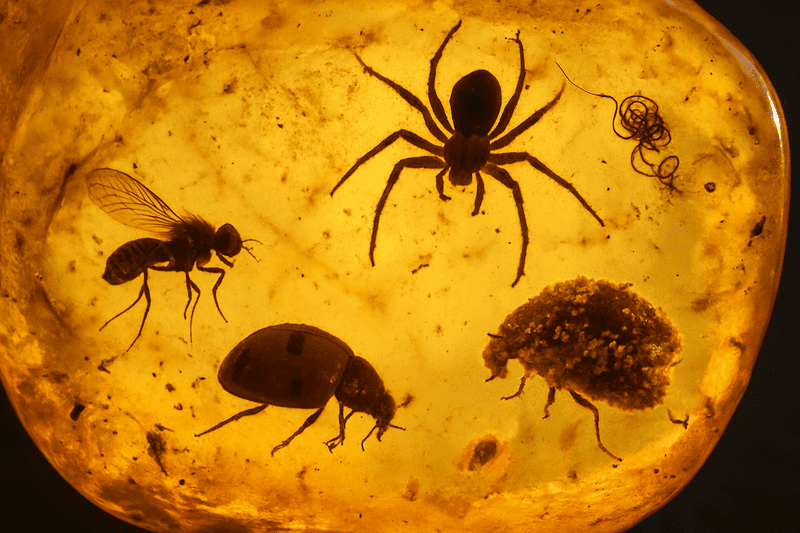
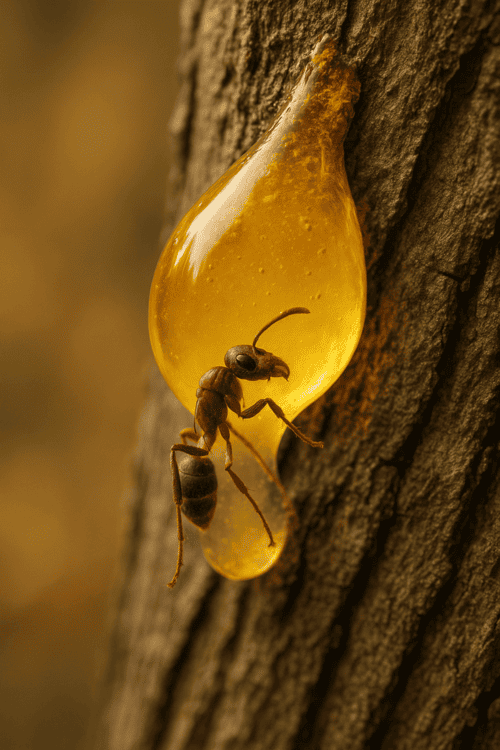
How Insects Get Trapped: Mechanisms of Inclusion Formation
Understanding how insects become inclusions is key to interpreting their significance.
1. Adhesion & Initial Entrapment
A sticky resin drop may coat insects walking on a tree trunk, branches, or near resin flows. Small insects, mites, and spiders are especially vulnerable.
2. Succession of Resin Flows / Overflows
Subsequent resin flows may pour over earlier sticky surfaces, burying and sealing trapped organisms. These multiple layers can preserve different stages of interaction (e.g. predation, mating) within one amber piece.
3. Rapid Burial & Exclusion of Decay
For preservation, the resin must harden quickly or be buried so that decay, oxidation, or microbial action is minimized. Low oxygen and minimal water infiltration help.
4. Polymerization & Fossilization
Over time, volatile compounds leave, polymerization consolidates the resin, and pressure and burial turn it into amber. The inclusion becomes encased in a hardened, stable medium.
5. Diagenesis Without Degradation
While amber preserves morphology extremely well, cellular and molecular remains often degrade. DNA, for instance, is rarely preserved intact.
These steps explain why smaller insects near resin sources are most commonly found as inclusions.
Patterns in Insect Inclusions: What Gets Preserved
Scientific surveys reveal consistent patterns in amber insect inclusions.
Dominant taxa and biases
A PNAS study, “Sampling the Insects of the Amber Forest,” found that inclusions are dominated by insects associated with resin-producing trees. In contrast, insects from other habitats – moths, butterflies – are underrepresented.
This bias arises because resin-dwelling species were simply more likely to be trapped.
Common orders found:
- Diptera (flies, midges)
- Coleoptera (beetles)
- Hymenoptera (ants, wasps, bees)
- Hemiptera (true bugs)
- Arachnids, mites, spiders
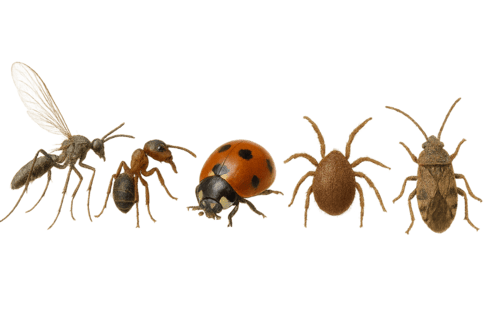
Exceptional finds include spiders, springtails, web fragments, and pollen intertwined with insects.
Because amber preserves detail, scientists have identified:
- Insects in life positions (e.g. mating pairs)
- Parasitoid wasp larvae inside hosts
- Predation or competition scenes
- Fungal growths on insect exoskeletons
- Pollen on insect bodies – evidence of ancient pollination

These detailed snapshots make amber inclusions more than curiosities – they are ecological time capsules.
Key Discoveries from Amber Inclusions
Amber inclusions have reshaped scientific understanding in multiple domains:
1. Evolutionary and Taxonomic Insight
By comparing insect morphology across time, researchers trace evolutionary patterns. Amber inclusions often preserve rare or extinct taxa missing from rock fossils.
2. Behaviors Frozen in Motion
Amber captures insects mid-action – mating, feeding, parasitism – creating moments frozen in resin.
3. Ancient Ecosystems & Habitat Clues
Mixed inclusions – insects, pollen, webs, soil particles – reveal climate, forest type, and biodiversity.
4. Trophic Relationships & Food Webs
Amber inclusions record predation, scavenging, and pollination, showing ancient ecological interactions.
5. Biogeography & Continental History
Amber fossils help trace species dispersal, continental drift, and evolutionary connections between regions.
Challenges & Limitations in Studying Amber Inclusions
While amber inclusions offer extraordinary insight, there are key constraints:
- Preservation bias: only insects near resin flows are trapped.
- Degradation: amber preserves exoskeletons, not internal tissues or DNA.
- Interpretation ambiguity: behavior inference requires caution.
- Syninclusion complexity: multiple organisms in one piece complicate analysis.
- Access & rarity: high-quality amber is often museum-held or privately owned.
Amber Inclusions & Jewelry: Science Meets Aesthetics
Though scientific value dominates, amber inclusions also shape how people value jewelry.
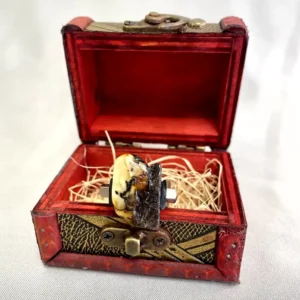
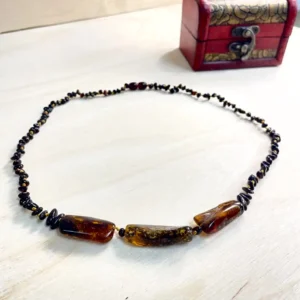
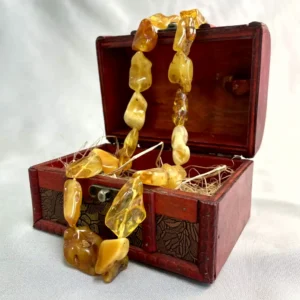
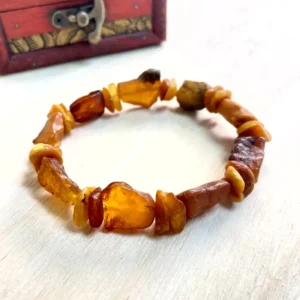
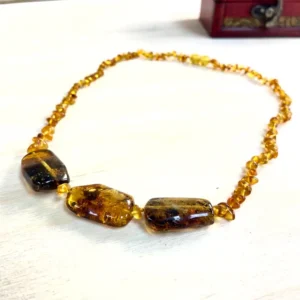
Many amber necklaces, bracelets, and rings are chosen specifically for visible insect inclusions.
They increase rarity and emotional appeal – a once-in-a-million inclusion can make a piece priceless.
However, scientists stress provenance and authenticity, ensuring inclusions are genuine and documented.
Thus, amber inclusions bridge natural history and human appreciation.
Why Amber Inclusions Continue to Fascinate
- Time capsules: Windows into ecosystems millions of years old.
- Extreme preservation: Amber protects soft-bodied organisms like no rock can.
- Behavioral insight: Predation, parasitism, mating – life caught in motion.
- Evolutionary calibration: Amber helps measure change through deep time.
- Public wonder: A fly or spider frozen in amber inspires both awe and curiosity.
When you hold a piece of amber jewelry containing an insect inclusion, you hold a fragment of ancient life – a story preserved through eons.
Frequently Asked Questions About Amber Inclusions
Q1: What are amber inclusions?
Amber inclusions are tiny organisms or organic materials – such as insects, plants, or fungi – that became trapped in tree resin and were later preserved in amber over millions of years.
Q2: How do insects become trapped in amber?
When sticky tree resin flows down trunks or branches, it can capture small creatures. If the resin hardens quickly and is later buried and fossilized, the insects remain perfectly sealed inside.
Q3: Do amber inclusions ever contain DNA?
No – while amber preserves morphology with stunning accuracy, DNA rarely survives. Claims of DNA extraction are scientifically disputed due to degradation and contamination.
Q4: Why are insect inclusions so common in amber?
Because insects live close to resin-producing trees, they are more likely to get trapped. Their small size and lightweight bodies make preservation easier compared to larger animals.
Q5: What makes amber inclusions valuable for science?
They provide 3D snapshots of ancient ecosystems, revealing evolution, climate conditions, and behaviors frozen in time – insights that rock fossils rarely preserve.
Q6: Can amber inclusions be found in jewelry?
Yes – amber jewelry with visible inclusions is highly prized. It combines scientific fascination with natural beauty, making each piece one-of-a-kind.
Q7: How can you tell if an inclusion in amber is real?
Genuine amber inclusions show natural positioning and clarity within the resin. Authentic pieces often come with certificates of origin or are sold by reputable jewelers or museums.
Final Thoughts
Amber inclusions, especially of insects, remain among nature’s most evocative and scientifically rich treasures.
They let us step into ancient forests, witness behaviors frozen in resin, and trace evolution’s timeline.
Every time you admire amber jewelry with an insect inside – a fly wing, a beetle leg, a minute web fragment – remember: you’re holding more than a gem.
You’re holding a story of evolution, ecology, and time itself.
Amber inclusions unite beauty, science, and wonder – and that is why they continue to captivate both scientists and jewelry lovers alike.